Google Ads Getting Clicks but No Leads? Run This Audit
Clicks without leads do not automatically prove poor traffic. Reconcile real enquiries, missed calls, broken forms and mislabeled micro-conversions before changing the campaign.

August 24, 2026
Table of contents
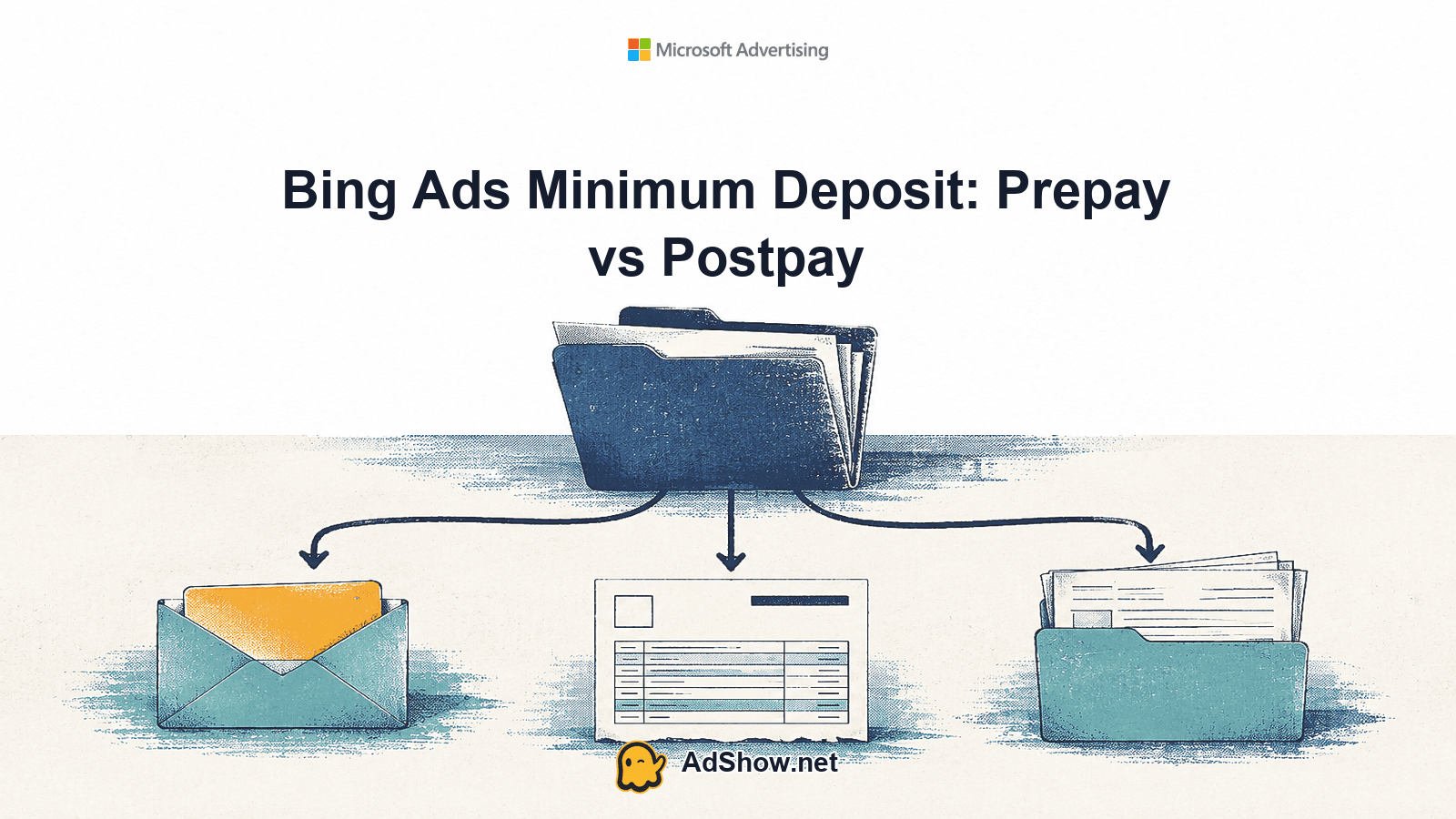
Start by reconciling the zero. Compare the Google Ads conversion report with CRM records, call logs, inboxes, form notifications, calendar bookings and chat transcripts for the same date range. A campaign showing no leads may have produced real enquiries that were never recorded, calls that nobody answered, forms that failed, or micro-actions such as page views and button clicks mislabeled as primary conversions. If those sources also show nothing, the evidence points toward a traffic, offer or follow-up problem—but it still does not prove which one. Do not pause a campaign or change bids until you know what the reported zero actually means.
Reconcile the lead count before touching the campaign
Build one simple reconciliation for the affected period. Start with clicks and cost in Google Ads, then record every claimed lead source outside the platform: answered calls, missed calls, voicemail messages, completed forms, emails, booked appointments and sales-team notes. Deduplicate by timestamp, phone number or email address. Mark each event as a genuine enquiry, a duplicate, spam, a support request, a test submission or an unqualified action.
Export Google Ads conversions by conversion action, campaign, device and day.
Compare those records with the CRM, call-tracking provider, website form inbox and calendar.
Check whether the supposed lead action is a form submission, phone call, chat, quote request or only an engagement signal.
Test the form and call number yourself from a mobile device and a desktop browser.
Write down the actual gap: no enquiries, enquiries not imported, or enquiries incorrectly classified.
This distinction changes the remedy. Missing imports require measurement repair. Missed calls require staffing, routing or call handling. Genuine but unqualified enquiries point toward intent, offer or qualification problems. A campaign cannot optimize reliably when all four outcomes are merged into one conversion label.
Verify conversion measurement and ownership
Use Google’s conversion-measurement guidance to inspect the tag, event trigger, conversion-action status, counting method, attribution setting and date of the last recorded conversion. Confirm that the tag fires after a successful form response rather than on a button click, page load or validation attempt. Check consent settings, redirects, thank-you pages, cross-domain steps and browser or server-side integrations where relevant.
Separate primary conversions used for bidding from secondary actions used for diagnosis. A phone-icon click can show intent, but it is not the same as a connected call. A form-start event can reveal friction, but it is not a submitted enquiry. If imported CRM conversions are delayed, compare reporting windows before concluding that Google Ads produced nothing.
The Google Ads conversion-measurement documentation is the relevant official reference for checking tags, conversion-action status and measurement gaps. It can help verify whether an event was recorded; it cannot prove that a recorded event was commercially valuable or that an unrecorded phone call never happened.
Harris Eugene’s operator note: Treat reconciliation as a release gate. If the buyer cannot identify which event counts as a lead and where that event is stored, campaign optimization is premature. An agency account can improve access, permissions and operational handling, but it cannot repair bad intent, broken tracking, a weak offer or slow follow-up.
Read search terms, not just keywords
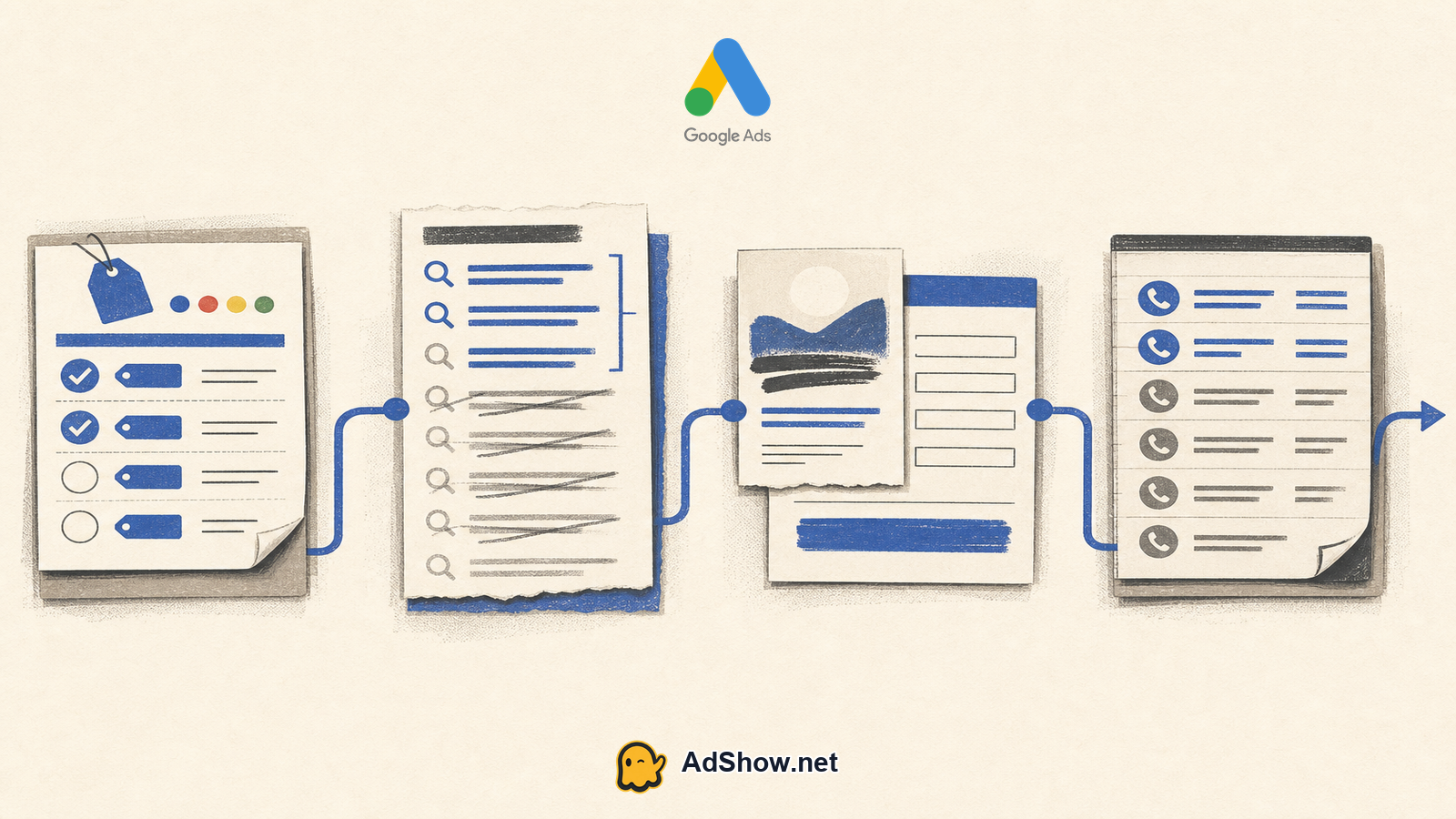
Once measurement is trustworthy, inspect the actual queries that triggered the ads. Google distinguishes search terms—the words users entered—from the keywords selected in the account. Review the search terms report for research language, free or cheap requests, jobs, tutorials, definitions, unrelated products and locations you do not serve.
Group queries by commercial intent rather than judging them one at a time. A service term may look relevant while still attracting users seeking employment, troubleshooting or a different business model. Add negative keywords where the mismatch is repeatable, tighten match types where control matters, and split high-intent themes into ads and landing pages that can make a specific promise.
Google’s search terms report guidance explains why actual queries deserve this review. Search-term evidence can show relevance and mismatch, but it cannot by itself prove that a query would have converted under a faster page, clearer price or better sales response.
Check location, partners and network leakage
Audit where impressions and clicks came from. Confirm the campaign’s location targeting option, excluded locations, presence settings, language, device distribution, schedule and network selection. A local advertiser can waste spend on people merely interested in a region rather than physically located there, or on users outside the service radius.
Review Search Partners and any display expansion separately when the campaign type allows them. Segment performance by network, location, device and hour before applying account-wide conclusions. A low conversion rate caused by a narrow partner or location segment may justify an exclusion; a weak result across every segment suggests a broader offer, intent or follow-up issue.
Test whether the landing page keeps the promise
Compare the user’s query, ad headline and first screen of the landing page. The page should immediately state what is offered, where it is available, who it is for and what happens after the visitor submits. If the ad promises a quote, the page should make the quote path obvious. If the query signals urgency, burying the phone number below several content sections creates a predictable loss.
Check mobile rendering, load time, consent prompts, broken redirects, price visibility, trust evidence and stock or service availability. Test every ad-to-page path, including tracking templates and final URLs. A high click-through rate can coexist with poor lead volume when the ad is attractive but the page is generic, unavailable or aimed at a different stage of the buying process.
Google’s conversion-rate improvement guidance recommends verifying tracking before making major changes and refining keywords and negatives. That sequence matters: changing the landing page while the form event is broken produces another ambiguous result.
Remove form and call friction
Submit the form as a new user. Record every field, error message, required format, loading delay and confirmation step. Remove fields that the sales team does not use, explain why sensitive information is requested, and show a clear confirmation with the next action. If a form is handled by a third-party tool, test the handoff, notification recipient and CRM creation rather than stopping at the browser confirmation.
For calls, verify the number displayed on mobile, call extensions, forwarding rules, business-hours routing, voicemail access and recording or tracking configuration. A click-to-call event can be counted even when the user hangs up immediately or the destination number is unreachable. Log answered, missed, abandoned and qualified calls separately.
Measure speed-to-lead and use a sensible sample guardrail
A lead is not complete when the form arrives. Record time to first response, contact attempts, answer rate, qualification rate and booked outcomes. Assign ownership for evenings, weekends and overflow. Recent advertiser discussions have highlighted missed calls and response handling as problems that can sit outside the Google Ads interface; those reports are useful operational prompts, not controlled evidence or universal benchmarks.
Do not use a universal click threshold to declare failure. Estimate the amount of evidence your target CPA requires. If the target CPA is $100 and the average click costs $2, one expected conversion at the target economics requires about 50 clicks. That is not a guarantee that a lead should appear at click 50, nor does it justify spending without limit. Use the relationship between target CPA, click cost and expected conversion rate, then examine the distribution by intent and segment.
For example, 20 clicks at $2 may be too little evidence to judge a low-volume service, while 150 tightly relevant clicks with a verified form and no qualified enquiries deserves a serious offer, page or traffic review. Pause or restrict a segment when its spend exceeds a defensible test budget, not because an anecdotal discussion reported a particular number of clicks.
Decide whether account access is actually the bottleneck
An agency account may help a team obtain managed access, centralize requests, fund the account and report operational issues. AdShow provides self-service access to agency advertising accounts across Google Ads and other major platforms; its dashboard supports offer and pricing visibility, account requests, wallet funding or top-ups and issue reports, with Telegram available for notifications and human guidance. Verify the live offer, terms and eligibility before paying.
That operational layer does not change Google’s auction, intent quality, conversion tracking, landing-page promise or sales response. An agency account remains subject to Google’s advertising policies. If reconciliation shows real but unqualified traffic, a broken form or a team replying hours later, changing account access is not the primary fix.
If access and account operations are the genuine constraint, review the current Google Ads agency account options and verify the live offer before funding. Google Ads agency account options
Questions from recent advertiser discussions
Why is Google Ads getting clicks but no leads?
The cause may be broken or mislabeled conversion tracking, irrelevant search terms, location or network leakage, landing-page friction, missed calls or slow follow-up. Reconcile external lead records before changing bids.
How many clicks should I wait for before making changes?
There is no universal threshold. Use target CPA and average click cost to estimate the required test budget, then assess intent, tracking validity and segment quality. A click count alone cannot prove campaign failure.
Can a high click-through rate still produce zero leads?
Yes. An appealing ad can attract low-intent users or set a promise that the landing page does not fulfill. High CTR measures ad engagement, not completed enquiries or sales quality.
Will an agency Google Ads account fix poor lead performance?
No. It can improve access and account operations, but it cannot repair weak intent, incorrect conversion tracking, a poor offer, landing-page friction or slow sales follow-up.
Sources and scope
Official documentation defines platform behavior. Recent community discussions are used only to illustrate reported symptoms and questions; they do not prove the cause of an individual account outcome.
Google Ads: conversion measurement — Official guidance for verifying tags, conversion-action status and measurement gaps.
Google Ads: search terms report — Official explanation of how actual search terms differ from keywords and how the report supports intent review.
Google Ads: improve conversion rate — Official guidance to verify tracking before major changes and refine keywords and negatives.
Recent PPC discussion: 61 clicks and zero leads — July 2026 advertiser discussion emphasizing verification of real versus invisible leads and landing-page intent; anecdotal, not a universal threshold.
Recent Google Ads discussion: spend without expected leads — June 2026 discussion showing that missed calls and response handling can sit outside the campaign interface; anecdotal operational evidence.