What To Do When Your Tiktok Ad Account Is Disabled in 2026
A disabled TikTok Ads account can stop campaigns instantly, interrupt tracking, freeze pending spend, and leave a media buyer unsure whether the problem is the ad, the website, the payment method, or the business itself.

August 6, 2026
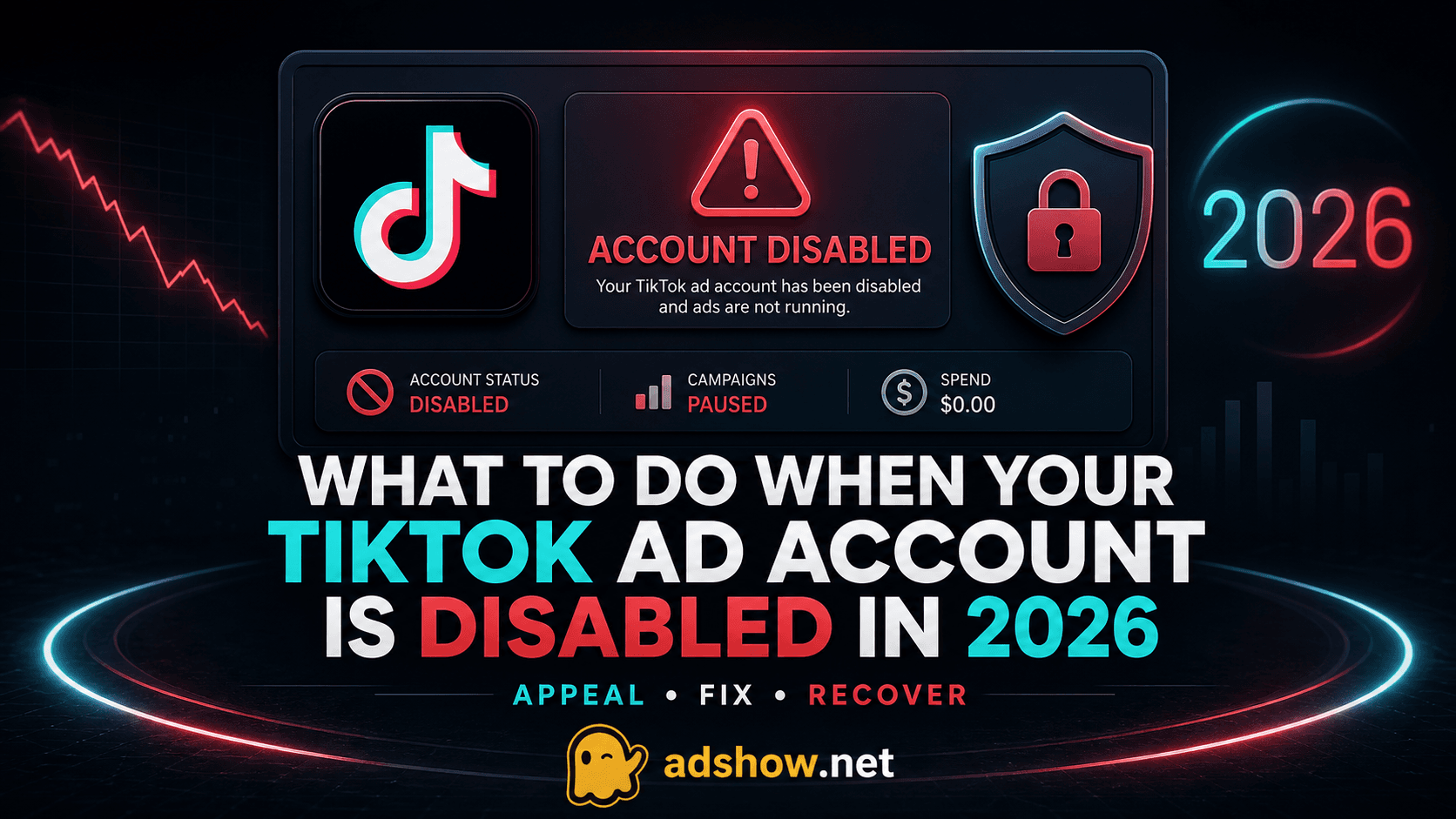
Table of contents
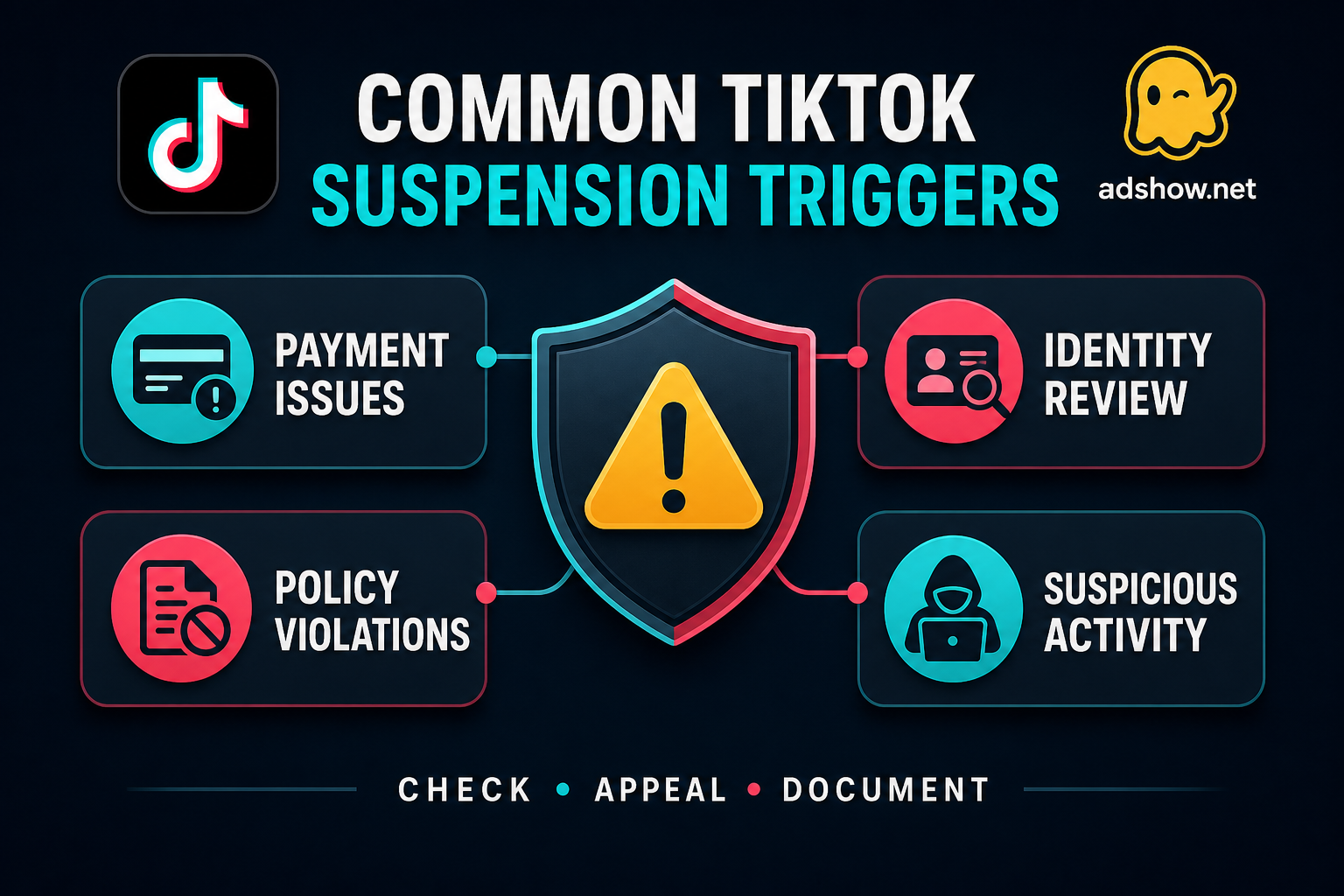
TikTok evaluates both advertising content and account behavior. In 2026, some violations may trigger an immediate suspension, while first-time cases may provide a limited period to correct the issue or submit an appeal. TikTok’s Account Health section is the first place to check. TikTok explains its suspension process here.
The most common reasons TikTok ad accounts are suspended
1. Failed payments or an unpaid balance
A declined card, expired payment method, unusual billing activity, or an unpaid balance can pause campaigns and suspend the account. TikTok states that campaigns may be paused once an outstanding balance exists. Check failed payments in TikTok Ads Manager.
Before submitting an appeal:
Check the billing page for an outstanding balance.
Confirm that the payment method belongs to the business.
Avoid repeatedly adding and removing cards.
Resolve chargebacks or failed deductions.
Keep billing information consistent with the account region.
2. Business verification or identity problems
TikTok may request business verification, identity documents, or information about the advertiser. Common problems include:
A company name that does not match the submitted documents.
An incorrect business address.
Documents that are expired, blurry, or incomplete.
A mismatch between the business, website, payment method, and ad account.
Repeated verification attempts with conflicting details.
Do not submit random or edited documents. Prepare accurate information and complete the verification process through TikTok Ads Manager or Business Center. TikTok’s business verification guide explains the available process.
3. Misleading claims and aggressive advertorials
TikTok is particularly sensitive to claims that appear exaggerated, deceptive, or impossible to verify. Risky examples include:
“Guaranteed results”
“Lose 10 kg in seven days”
“Earn money instantly”
Fake urgency or countdown timers
Before-and-after claims without proper context
Claims that imply personal attributes or medical conditions
The landing page must support the claims made in the ad. Changing the page after approval can also create a new compliance problem.
4. Landing-page and website quality issues
Even when the video itself looks acceptable, the destination may cause account trouble. Typical issues include:
Missing privacy policy, terms, refund policy, or contact details.
A domain that redirects through several unrelated URLs.
A page that loads differently for TikTok’s review system.
Broken links or slow mobile performance.
A checkout page that does not clearly identify the seller.
Content that does not match the advertisement.
Review the entire user journey, not only the first landing page. TikTok can review the final destination after the campaign has already been approved.
5. Restricted or sensitive verticals
Certain categories receive additional scrutiny, including supplements, financial services, gambling, cosmetics, health products, crypto, dating, and lead-generation offers.
A product may be legal in one country but restricted in another. Before relaunching, check:
Whether the vertical is permitted in the target market.
Whether TikTok requires documentation or pre-approval.
Whether the landing page contains prohibited promises.
Whether age, location, or audience restrictions are required.
Whether the creative follows local advertising regulations.
6. Suspicious account behavior
TikTok may flag behavior that looks automated, coordinated, or evasive. Examples can include:
Rapidly creating multiple ad accounts.
Frequently changing business information.
Logging in from unusual locations.
Using inconsistent devices, domains, or payment profiles.
Reusing rejected creatives without meaningful changes.
Attempting to work around previous enforcement.
Creating another account before understanding the original violation can make the situation worse. Fix the underlying issue first.
7. Repeated ad rejections
Repeatedly submitting similar ads after rejection is one of the fastest ways to damage Account Health. TikTok can continue reviewing an ad after initial approval if it receives complaints or detects a policy issue later. TikTok describes this additional review process here.
Pause the campaign, identify the exact rejected element, and change the offer, copy, creative, and landing page where necessary. Do not simply change one word and resubmit the same concept.
What to do after your TikTok ad account is disabled
Step 1: Capture the evidence
Save screenshots of:
The suspension notice.
Account Health warnings.
Rejected ads and policy reasons.
Payment errors.
Verification requests.
The affected landing pages.
This evidence helps you understand the actual trigger and prepare a credible appeal.
Step 2: Stop making unnecessary changes
Do not change the business name, payment profile, domain, or account access repeatedly while the review is pending. Excessive changes can create more inconsistencies.
Step 3: Audit the complete funnel
Review the ad video, caption, call to action, product page, checkout flow, privacy policy, payment information, and tracking setup. TikTok may consider the entire customer experience.
Step 4: Submit one clear appeal
If the suspension was incorrect, explain what happened in a calm and factual way. Include:
Your business model.
The product and target market.
The steps you took to correct the issue.
Relevant documents or website updates.
A commitment to follow TikTok’s policies.
Avoid emotional language, repeated tickets, or vague statements such as “please unlock my account.” TikTok’s support guidance warns that multiple appeals for the same incident can delay processing. See TikTok’s appeal guidance.
Step 5: Respect the review window
For some first-time violations, TikTok provides time to correct the issue or appeal. If the appeal is rejected after the applicable period, the suspension may become permanent. Do not assume that opening a new personal account will solve the problem.
Where Adshow.net may help
If you have corrected the ads, website, payment setup, and verification issues but still cannot recover the account, Adshow.net can provide a TikTok Ad Agency account as an alternative advertising setup.
This should be treated as compliant infrastructure for eligible campaigns—not as a way to bypass TikTok enforcement. Confirm the accepted vertical, target GEO, funding terms, account permissions, and replacement policy before starting.
Final takeaway
A TikTok suspension is rarely caused by one isolated setting. The strongest recovery approach is to identify the actual trigger, correct the complete funnel, submit one honest appeal, and keep all business information consistent.
If recovery is unsuccessful after every legitimate step, an agency account may offer a healthier operational starting point for future campaigns—provided that the advertiser follows TikTok’s rules from day one.