Google Ads CPC: What Does a Click Really Cost?
Google Ads CPC is not a public fixed price. Learn how max, actual, average and affordable CPC differ, what changes the auction, and when a cheaper click hurts performance.

August 28, 2026
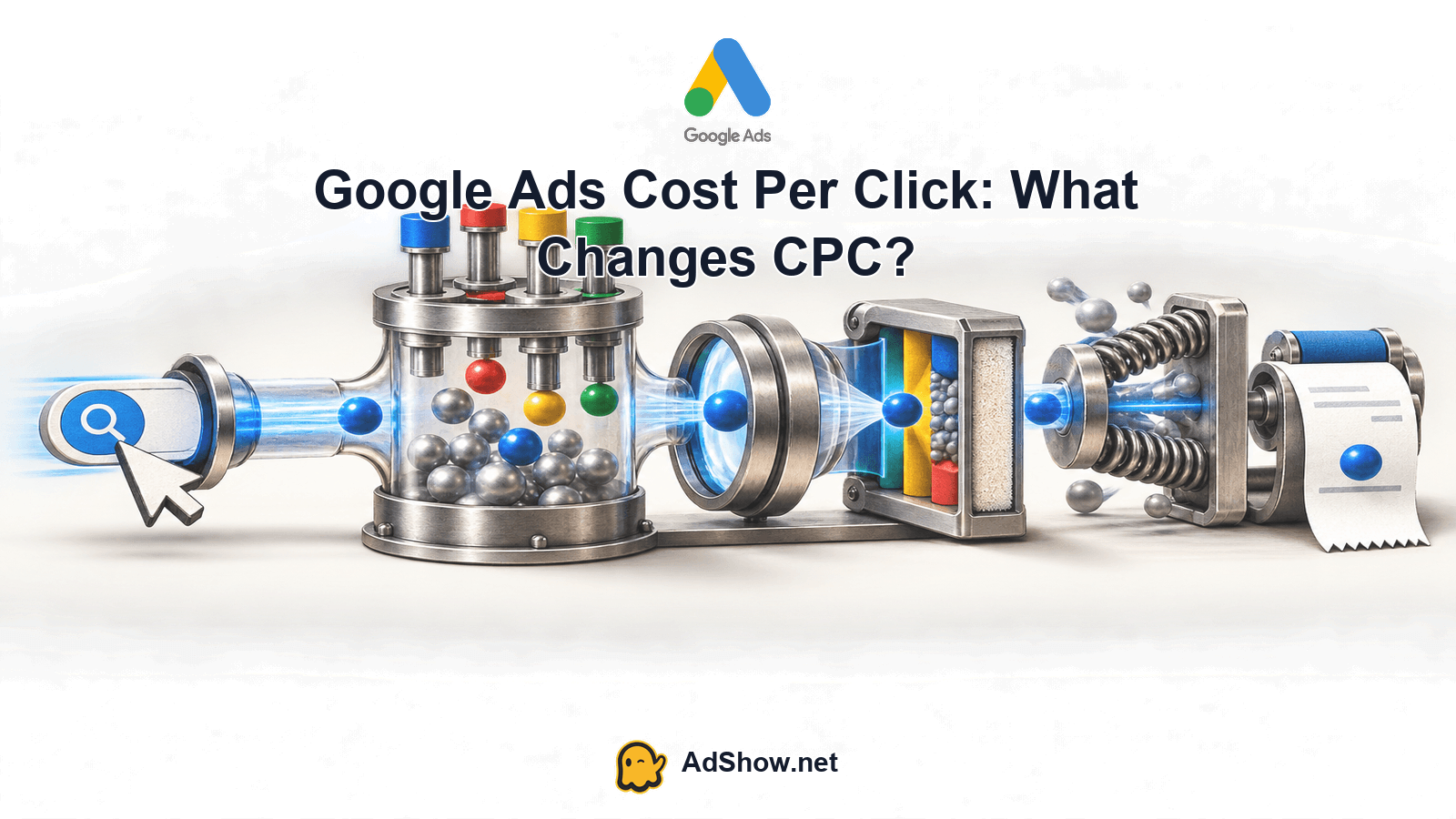
Table of contents
Google Ads cost per click is the amount charged for a click on an ad, and it is not a fixed public price. Each eligible search can trigger a new auction, so the amount depends on the advertiser's bid, auction-time quality, competition, Ad Rank thresholds, search context and the expected impact of assets. A click that costs $1 may be excellent for one offer and unprofitable for another. The useful question is not simply “What is the average CPC?” but “What can this business afford to pay for a qualified conversion?”
Four CPC figures advertisers must separate
Maximum CPC is the highest bid an advertiser is willing to submit for a click under a manual bidding setup or bid limit. It is not necessarily what Google charges. Automated strategies can also use their own bidding constraints and targets rather than a simple fixed keyword bid.
Actual CPC is the amount charged for a click. Google explains that the final charge can be below the maximum bid and is affected by the auction conditions, including the Ad Rank of other ads and the relevant threshold. A maximum CPC of $5 does not mean every click costs $5.
Average CPC is a reporting average: total click cost divided by the number of clicks for the selected date range and segment. It can hide expensive commercial queries, cheap navigational searches, mobile and desktop differences, or a recent shift in traffic mix.
Affordable CPC is the advertiser's economic ceiling. It comes from the value of a conversion, not from a generic market average. A campaign can have an average CPC below its maximum bid and still lose money if the clicks produce weak leads or low-value customers.
What changes the price in the auction
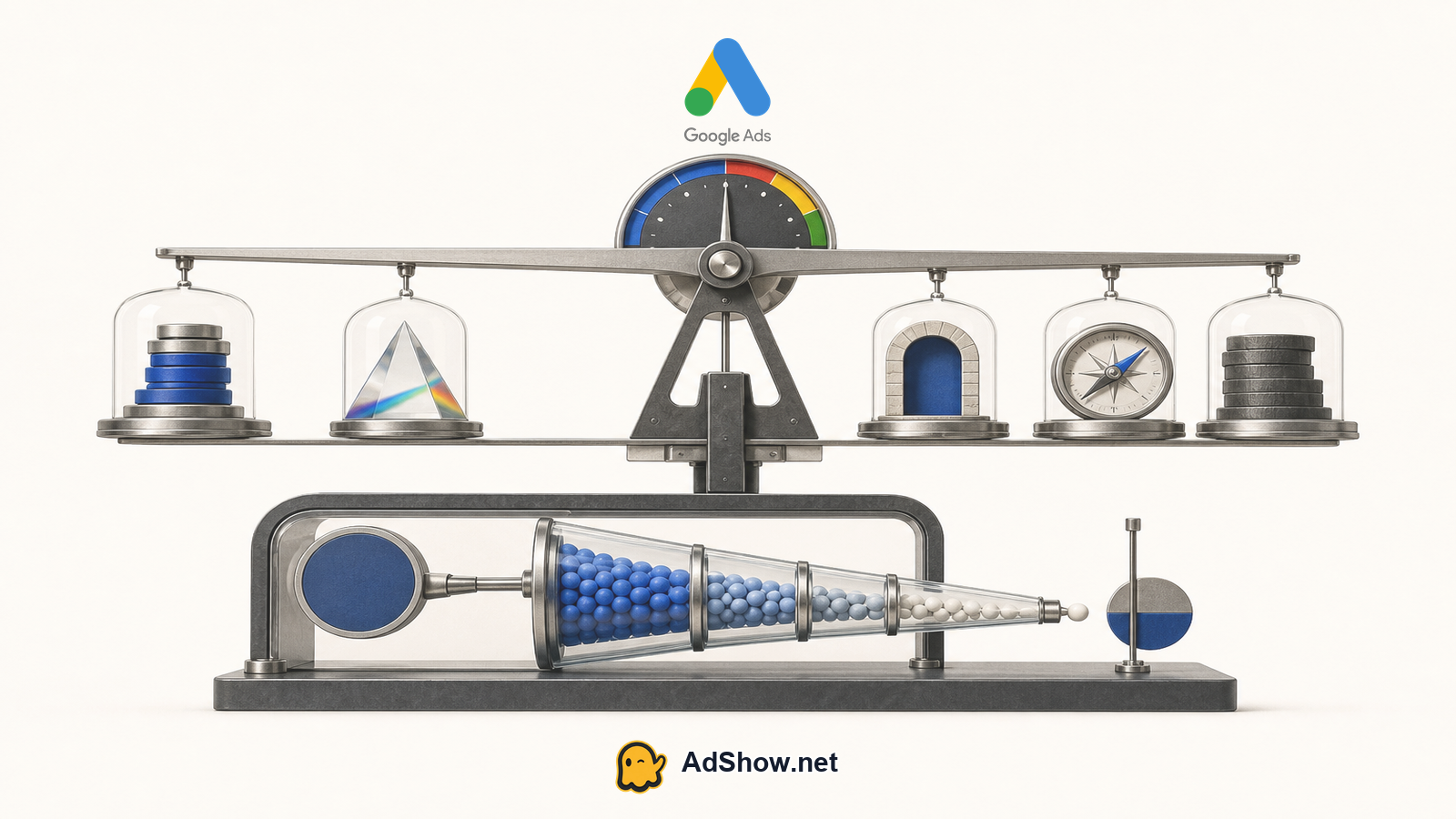
Google says an auction runs whenever a search is eligible to show an ad. Ad Rank helps determine whether an ad appears, where it appears and whether it clears the required thresholds. The inputs are not limited to the number entered in the bid field.
The bid or bid-related signal expresses how much the advertiser is willing to compete.
Auction-time ad quality includes expected click-through rate, ad relevance and landing-page experience, assessed in the context of the particular search.
Ad Rank thresholds can affect eligibility and the minimum conditions for an impression, even when few ads appear below yours.
Competition changes from one search to the next. A competitor entering a valuable query can affect both visibility and price.
Search context includes the query, location, device, time, other signals and the nature of the search.
Assets such as sitelinks, callouts and other formats can have an expected impact on performance and may affect Ad Rank when eligible.
These inputs interact. Better relevance is not a guaranteed discount, and a higher bid is not a guaranteed top position. Google provides bid simulators and planning tools, but their estimates are forecasts rather than promises of future traffic, CPC or conversions. Do not treat a simulator's suggested bid as a public price list.
A simplified auction example—not Google's formula
Hypothetical illustration: Three advertisers enter the same search. Advertiser A has a maximum bid of $4.00, Advertiser B has $3.20 and Advertiser C has $2.10. A's ad is highly relevant to the query, B's is reasonably relevant and C's page is a weaker match. Location, device and the expected effect of assets also differ.
A may win the visible position but pay less than its $4.00 maximum because it does not need to spend the full amount to clear the next relevant competition and the applicable threshold. B may receive a lower position or no impression if it fails a threshold in that context. C may be ineligible despite having a bid. The actual charges in this example are intentionally not presented as a Google pricing calculation: the real auction has more inputs, and Google does not publish a single simple formula that advertisers can use to reproduce every click price.
Calculate the CPC your business can afford
Start with allowable CPA: the maximum amount you can spend to acquire the conversion while preserving the required contribution. Then multiply it by the conversion rate from click to that conversion.
Affordable CPC = allowable CPA × conversion rate
For example, if the allowable CPA is $120 and 4% of clicks become the defined conversion, the affordable CPC is $4.80. At a 2% conversion rate, it falls to $2.40. That is a planning ceiling, not a bid recommendation: tracking quality, sales acceptance, refunds, gross margin and repeat value can change the allowable CPA.
A cheaper click can be worse. Suppose a broad query reduces CPC from $4.80 to $2.20 but attracts visitors who are researching rather than buying. If the conversion rate falls from 4% to 1%, the implied CPA rises from $120 to $220. The account reports lower CPC while the economics deteriorate. Lead generation has an additional risk: a form submission may be counted as a conversion even when the sales team cannot contact, qualify or close the lead.
Harris Eugene’s operator note: judge CPC against contribution and qualified conversion value, never against a generic average. A click is a cost input; it is not a performance verdict. I would rather accept a higher CPC that reliably produces profitable, sales-accepted outcomes than celebrate a lower CPC created by weak intent or poor traffic controls.
Why CPC varies across the same account
CPC is not stable simply because the campaign name is stable. Query intent is a major dividing line: a term showing purchase intent may attract more competition than an informational term. Location can change the available advertisers and local demand. Device can alter both competition and post-click behavior. Time of day and day of week can change who is bidding and who is searching.
Placement also matters. Search, search partners, Display inventory and other campaign environments should not be blended casually when diagnosing price or quality. Within a network, the query, audience, page context and placement can alter the traffic mix. Segment reports before deciding that CPC has “risen” across the whole account.
Recent community discussions about very expensive clicks or sudden CPC increases are useful signals about advertiser concerns, not benchmarks. Posts on Reddit describe individual accounts, markets and date ranges; they do not establish a universal Google Ads price or prove that the same movement occurred in your campaign. Verify the claim against your own segmented data.
The CPC audit: reconcile the receipt
Treat the account like a receipt that must be reconciled. The reported CPC is only one line item. Check the following in order:
Search terms and intent: identify which queries generated the spend, then label them as buying, comparison, branded, informational, irrelevant or ambiguous. Add negatives or restructure themes when the traffic does not match the offer.
Conversion tracking and qualified outcomes: confirm that the primary conversion fires once, attributes correctly and represents a meaningful action. Compare online conversions with qualified leads, booked appointments, accepted opportunities, sales and contribution.
Network and placement segmentation: separate Search from partners and other inventory where applicable. Review device, location, time and campaign type before comparing CPC periods.
Bid strategy constraints: check bid limits, target CPA or target ROAS settings, budget status, learning periods and major recent changes. Lowering a bid can reduce CPC, but it can also remove auctions, impressions and conversion volume.
Landing-page relevance: match the page to the query and ad promise. Check load performance, message continuity, form friction, mobile usability and whether the page makes the next action clear.
Auction change: compare impression share, lost impression share, top-of-page metrics, competitor movement where available and changes in eligible demand. A CPC increase may reflect stronger competition or a different traffic mix rather than a tracking fault.
Record spend, clicks, actual CPC, conversion rate, qualified conversion rate and contribution by the same segment. This exposes the common reconciliation error: a campaign-level average looks acceptable while one expensive query group consumes the budget and produces weak outcomes.
When lowering bids helps—and when it only cuts volume
Lower bids can be sensible when actual CPC is above the affordable ceiling, conversion value is weak, the campaign is buying marginal positions or the account has enough excess demand to test efficiency. Make the change with a defined measurement window and monitor qualified conversions, not CPC alone.
Lowering bids merely removes volume when the existing clicks are profitable, the campaign is budget-limited, or the lost auctions contain the highest-intent searches. A cheaper average can result from abandoning valuable traffic. Conversely, raising bids may improve reach or position, but it does not guarantee a lower CPC.
Raising the campaign budget does not directly lower CPC. Budget determines how much eligible demand the campaign can pursue; the auction determines the price of each click. More budget can expose the campaign to additional, potentially more expensive searches. If the campaign is already constrained by CPC economics, adding budget without fixing intent, tracking or conversion value can scale the loss.
Where AdShow fits into Google Ads operations
AdShow is a self-service route for accessing and operating agency advertising accounts, including Google Ads. Its dashboard supports viewing current offers and pricing, requesting accounts, funding or topping up a wallet and reporting issues; Telegram can provide notifications and human guidance. Access remains subject to platform policy.
AdShow cannot alter Google's auction pricing. It cannot make an uneconomic click profitable, repair weak tracking, improve an irrelevant landing page or change the quality of an offer and funnel. Those remain advertiser-side responsibilities. For operating access, review the Google agency advertising accounts; for broader planning, see how much Google Ads costs and Google Ads getting clicks but no leads.
Need a self-service operating route for Google Ads agency account access? Review current options and request access through AdShow. Explore Google Ads agency accounts
Questions from recent advertiser discussions
What is a good CPC in Google Ads?
There is no universal good CPC. Compare actual CPC with affordable CPC, then verify conversion quality, contribution and qualified outcomes by query, device, location and network.
Why is my Google Ads CPC suddenly high?
Check query mix, competitors, location, device, time, placement, Ad Rank indicators, bid strategy changes and conversion tracking. A community report can flag a concern, but it is not proof of a universal price increase.
Does a higher maximum CPC always increase the actual CPC?
No. Maximum CPC is a ceiling or bidding input, while actual CPC is the charge produced by the auction. A higher bid can improve eligibility or position, but the final charge depends on the auction context.
Should I lower bids if CPC is above my target?
Lower bids can help when clicks exceed the affordable ceiling and marginal traffic is unprofitable. They can also remove profitable volume, so assess qualified conversion value and impression loss rather than CPC alone.
Sources and scope
Official documentation defines platform behavior. Recent community discussions are used only to illustrate reported symptoms and questions; they do not prove the cause of an individual account outcome.
Google Ads: actual CPC definition — Official explanation of actual CPC, maximum CPC and the auction factors that affect the final click charge.
Google Ads: Ad Rank thresholds — Official context for why actual CPC can remain relatively expensive even when few ads appear below an advertiser.
Google Ads: how the auction works — Official explanation that a new auction runs for each eligible search and uses Ad Rank to determine ad appearance.
Google Ads: adjust keyword bids — Official guidance on bids and simulators, whose estimates do not guarantee future traffic or performance.
Recent discussion: why Google Ads feels expensive — August 2026 advertiser discussion illustrating concern about high CPC and the importance of customer value; anecdotal, not a pricing benchmark.
Recent discussion: rising CPCs — April 2026 discussion showing account-specific CPC volatility across competitors, devices and markets; community observations are not universal evidence.