Google Ads Cost in 2026: CPC, Budget and Monthly Math
Google Ads has no fixed price. Use CPC, clicks, conversion rate and Google's 30.4x monthly budget rule to estimate a realistic test budget.

August 25, 2026
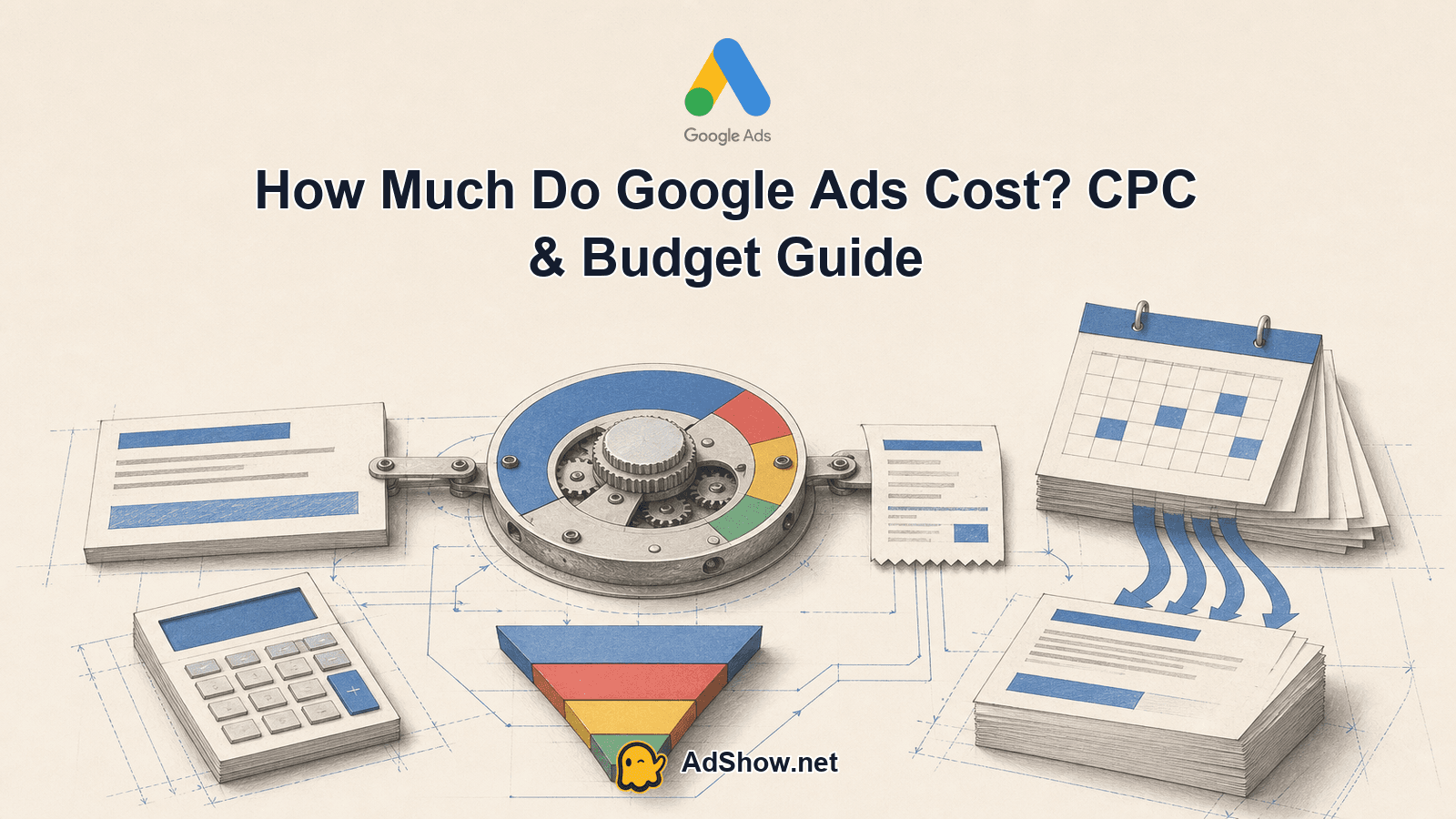
Table of contents
Google Ads cost: the 60-second estimate
Google Ads does not have one fixed price. Your cost is the result of auction prices, the clicks you buy and the conversion rate after those clicks. For most campaigns, Google defines the monthly spending limit as the average daily budget multiplied by 30.4; a single day can spend up to twice the average daily budget. Google's current budget guidance explains both limits.
Average daily budget = planned monthly media budget / 30.4.
Estimated clicks = monthly media budget / expected actual CPC.
Estimated conversions = estimated clicks x measured conversion rate.
Estimated CPA = monthly media cost / estimated conversions.
Example: a $3,040 monthly media budget equals a $100 average daily budget. At a $4 actual CPC it may buy about 760 clicks; at a measured 4% conversion rate that is roughly 30 conversions and a media CPA near $101. Treat this as planning math, not a performance promise: CPC and conversion rate vary by query, country, device, offer and landing page.
Google Ads has no universal price. You choose a bidding strategy and an average daily budget, while the auction determines the cost of each eligible click. Your invoice therefore depends on search intent, competition, bid limits, ad quality, conversion rate and the campaign's delivery pattern. A useful planning model is: media cost = clicks × actual CPC; conversions = clicks × conversion rate; cost per acquisition = media cost ÷ conversions. The numbers below are hypothetical inputs, not market averages.
Start with the invoice, not the headline CPC
For a practical estimate, work backward from the acquisition cost you can afford. Suppose a hypothetical advertiser wants 20 leads per month and can spend $80 per qualified lead. The planned media budget is $1,600. If the landing page converts 5% of ad clicks, the campaign needs 400 clicks: 20 conversions ÷ 0.05. The implied click-cost ceiling is $4: $1,600 ÷ 400 clicks. That is a planning threshold, not a guaranteed Google Ads price.
Set the acceptable target CPA: for example, $80 per qualified lead.
Set the required conversion volume: for example, 20 qualified leads.
Calculate the required budget: 20 × $80 = $1,600.
Estimate the required clicks from the conversion rate: 20 ÷ 5% = 400 clicks.
Calculate the affordable average CPC: $1,600 ÷ 400 = $4 per click.
Compare actual performance with the model before increasing spend.
This reverse calculation separates four decisions that are often blended together. Search intent determines whether the query is likely to produce a buyer, researcher or irrelevant visitor. Click cost is what you pay for traffic. Conversion rate describes how efficiently the page and offer turn clicks into actions. Target CPA is the business limit for acquiring one conversion. A high CPC does not automatically make a campaign unprofitable, and a low CPC does not make weak intent profitable.
Max CPC and actual CPC are different numbers
A maximum CPC bid is the most you are willing to pay for a click under the relevant bid setting. It is not necessarily the amount charged. Google explains that actual CPC is often below the maximum bid and is determined through the ad auction, including the competition and ad rank required to show in a position. Review Google's actual CPC explanation alongside the platform's guidance on bids and budgets.
The amount on an invoice is best assessed at campaign or account level over a meaningful period, not from one unusually expensive click. A maximum CPC of $4 does not guarantee a $4 average CPC, and it does not guarantee that every eligible search will receive a click. Automated bidding can also change how a manual bid limit relates to delivery, depending on the strategy and settings. The evidence can explain the auction mechanics; it cannot predict the CPC for a particular keyword, location or date.
How the average daily budget becomes a monthly plan
Google Ads uses an average daily budget as a planning input. For a simple monthly estimate, multiply it by 30.4, Google's standard monthly planning multiplier. A hypothetical $50 average daily budget therefore produces a planned monthly limit of $1,520: $50 × 30.4. This is a planning calculation, not a promise that every day will spend exactly $50.
Under Google's spending rules, campaign cost on a particular day may reach up to twice the average daily budget when traffic opportunities are stronger. For the $50 example, a day could reach $100. Google's monthly charging limit still applies under its rules, generally based on 30.4 times the average daily budget. Read the official explanation of spending limits before treating a daily figure as a hard daily cap. Delivery can vary by demand, and billing details may differ for certain campaign or account circumstances.
Average daily budget: the amount used to guide average daily delivery.
Monthly planning figure: average daily budget × 30.4.
Possible high-spend day: up to twice the average daily budget under Google's stated rules.
Monthly control: Google's applicable monthly charging limit still governs the campaign.
Forecast: an estimate based on assumptions, not a guaranteed number of clicks or conversions.
The same budget can buy very different outcomes
Search intent is the first filter. A query such as “buy emergency replacement part” may be commercially urgent, while “how does a replacement part work” may be informational. The first query can justify a higher CPC if it produces valuable customers; the second may generate cheaper traffic but fewer sales. Keyword volume alone cannot establish profitability.
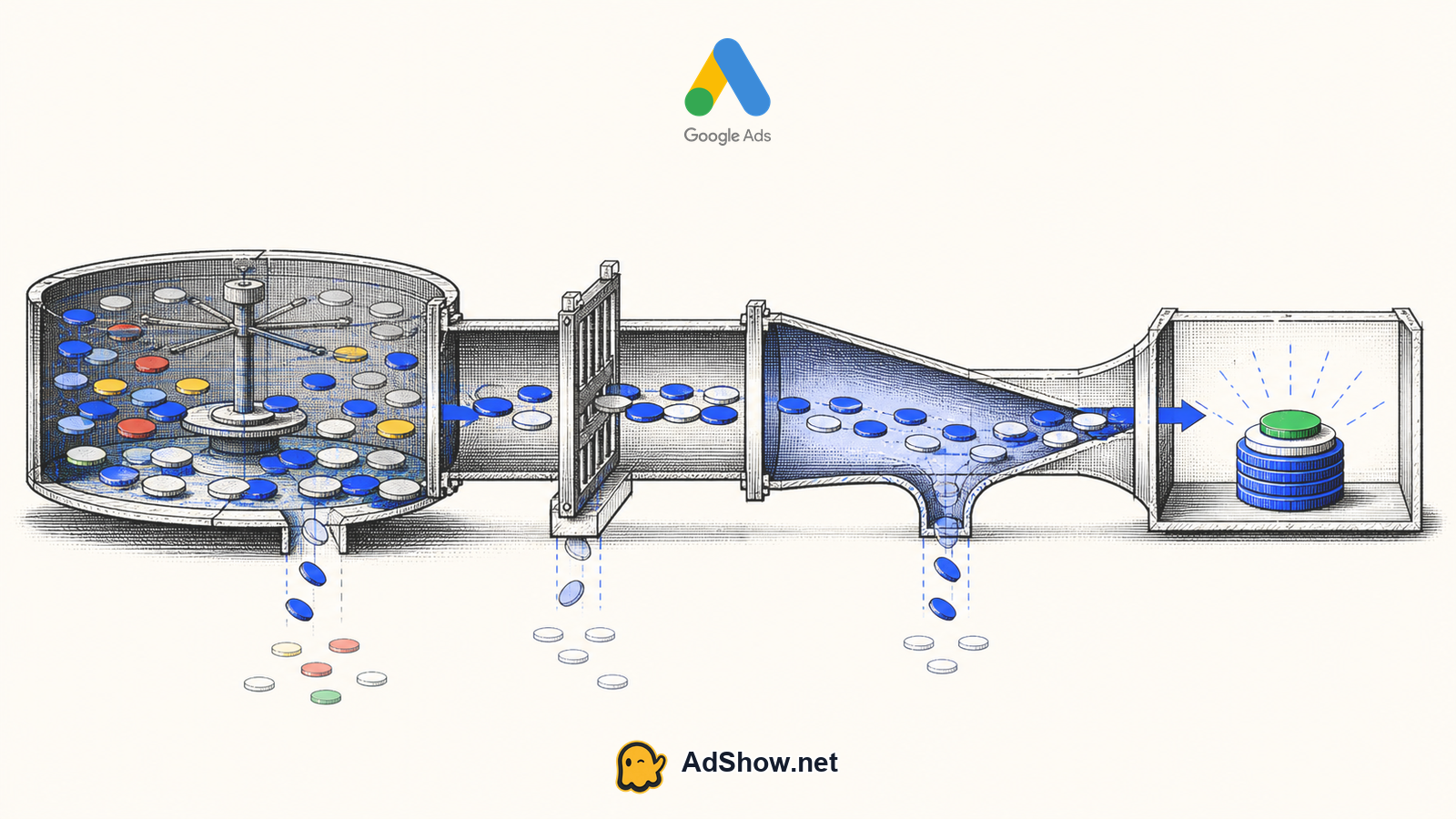
The hypothetical $1,600 plan illustrates the interaction. At a $4 average CPC, it buys 400 clicks. At a 5% conversion rate, those clicks produce 20 conversions and an $80 CPA. If the conversion rate falls to 2.5% while CPC stays at $4, the same budget buys 400 clicks but only 10 conversions, raising CPA to $160. If CPC rises to $6 while conversion rate remains 5%, the budget buys about 267 clicks and produces about 13 conversions, with an implied CPA near $123.
These calculations do not prove what Google will charge or how many leads will be qualified. They show where to investigate: query quality, search terms, auction pressure, landing-page friction, tracking accuracy and sales follow-up. For campaigns receiving clicks without calls, review this clicks but no calls checklist. For clicks without leads, use the Google Ads leads troubleshooting guide.
Hidden costs beyond the Google Ads invoice
Media spend is only one line in the acquisition budget. A lead campaign may also require landing-page design, copywriting, call tracking, analytics configuration, consent handling, CRM integration and someone to answer calls or qualify form submissions. Ecommerce teams may need feed management, product-page testing, creative production and margin analysis. Affiliates should include compliance review, tracking infrastructure and the value of delayed or rejected commissions.
A useful total-cost model is: total acquisition cost = ad spend + landing-page cost + measurement cost + sales or call-handling cost + platform or operational fees. If a $4 click produces a lead but an unanswered call makes that lead unusable, the apparent CPC understates the business cost. AdShow's agency ad account total-cost model can help structure those non-media inputs.
Harris Eugene’s operator note: When CPC rises, the first decision should not automatically be to buy more clicks. If search terms show strong intent but the conversion rate is weak, repairing the landing page, form, call flow or measurement usually deserves priority. More traffic can multiply a conversion problem. Increase volume only when tracking is credible, the offer converts at an acceptable rate and the resulting CPA leaves room for gross margin and operating costs.
What current advertiser complaints can and cannot show
Recent community discussions include complaints about weaker performance and concerns that Google Ads is becoming more automated. Those posts are useful for identifying operator symptoms and language, but they are anecdotal. They do not establish a universal CPC increase, a platform-wide performance decline or a specific cause for an individual account. Account structure, query mix, seasonality, tracking changes, competitors and offer quality can produce similar symptoms.
Official Google documentation is the appropriate source for budget and auction mechanics. Community posts can suggest what to audit, not prove what happened. The defensible approach is to compare impression share, search terms, actual CPC, conversion rate, qualified conversion rate and CPA across comparable periods while recording material changes in bids, targeting, landing pages and measurement.
Agency accounts change operations, not auction economics
An agency account can change how access, account provisioning, wallet funding, top-ups, reporting and issue handling are managed. It does not change the Google Ads auction, guarantee a lower CPC or remove the need to follow Google's policies. It also does not repair inaccurate tracking, weak creative, poor landing pages, an unattractive offer or an unprofitable funnel.
AdShow provides self-service agency advertising accounts for Google Ads and other major platforms. Its dashboard supports pricing visibility, account requests, wallet funding or top-ups and issue reports, while Telegram may provide notifications and human guidance. Availability, eligibility, pricing, processing, replacement, refund and approval terms can change, so verify the live offer before funding an account.
Four practical questions advertisers ask
Review the current Google Ads agency-account offer and confirm the live terms before proceeding. View Google Ads agency-account options
Questions from recent advertiser discussions
Is there a minimum budget for Google Ads?
Google Ads does not set one universal minimum budget for every advertiser or campaign. You choose an average daily budget, but a useful minimum depends on expected CPC, conversion rate, target CPA and the time needed to collect reliable data.
Can Google Ads spend twice my daily budget?
A campaign's cost may reach up to twice its average daily budget on a particular day under Google's spending rules. The applicable monthly charging limit still applies, generally using the 30.4 monthly planning multiplier.
Why is my actual CPC different from my maximum CPC?
Maximum CPC is a bid limit, while actual CPC is the amount charged for a click. Google states that actual CPC is often below the maximum and is determined by auction conditions and the ad rank needed to show.
Should I raise my budget when conversions fall?
Not automatically. First check search intent, search terms, actual CPC, tracking, landing-page conversion rate and lead quality. If the funnel is not converting, more clicks can increase total loss rather than improve CPA.
Sources and scope
Official documentation defines platform behavior. Recent community discussions are used only to illustrate reported symptoms and questions; they do not prove the cause of an individual account outcome.
Google Ads: choose your bid and budget — Official definitions of average daily budget and maximum CPC, including the 30.4 monthly planning multiplier and the fact that actual CPC is often below the maximum bid.
Google Ads: manage how much you spend — Official explanation of spending limits, including that daily campaign cost may reach up to twice the average daily budget while monthly charging limits apply.
Google Ads: actual cost per click — Official explanation of actual CPC and the ad-auction relationship.
Recent Google Ads discussion: performance decline — June 2026 advertiser discussion showing how operators interpret higher costs and lower performance; anecdotal, not evidence of a universal platform change.
Recent Google Ads discussion: automation concerns — June 2026 discussion capturing current advertiser concerns about control and automation; community opinion, not official cost data.