Can You Bid on Competitor Keywords in Google Ads?
Google generally allows trademarks as keywords, but ad copy, identity, landing-page claims, local law and lead quality create separate risks. Here is a practical framework for testing competitor traffic.

August 30, 2026
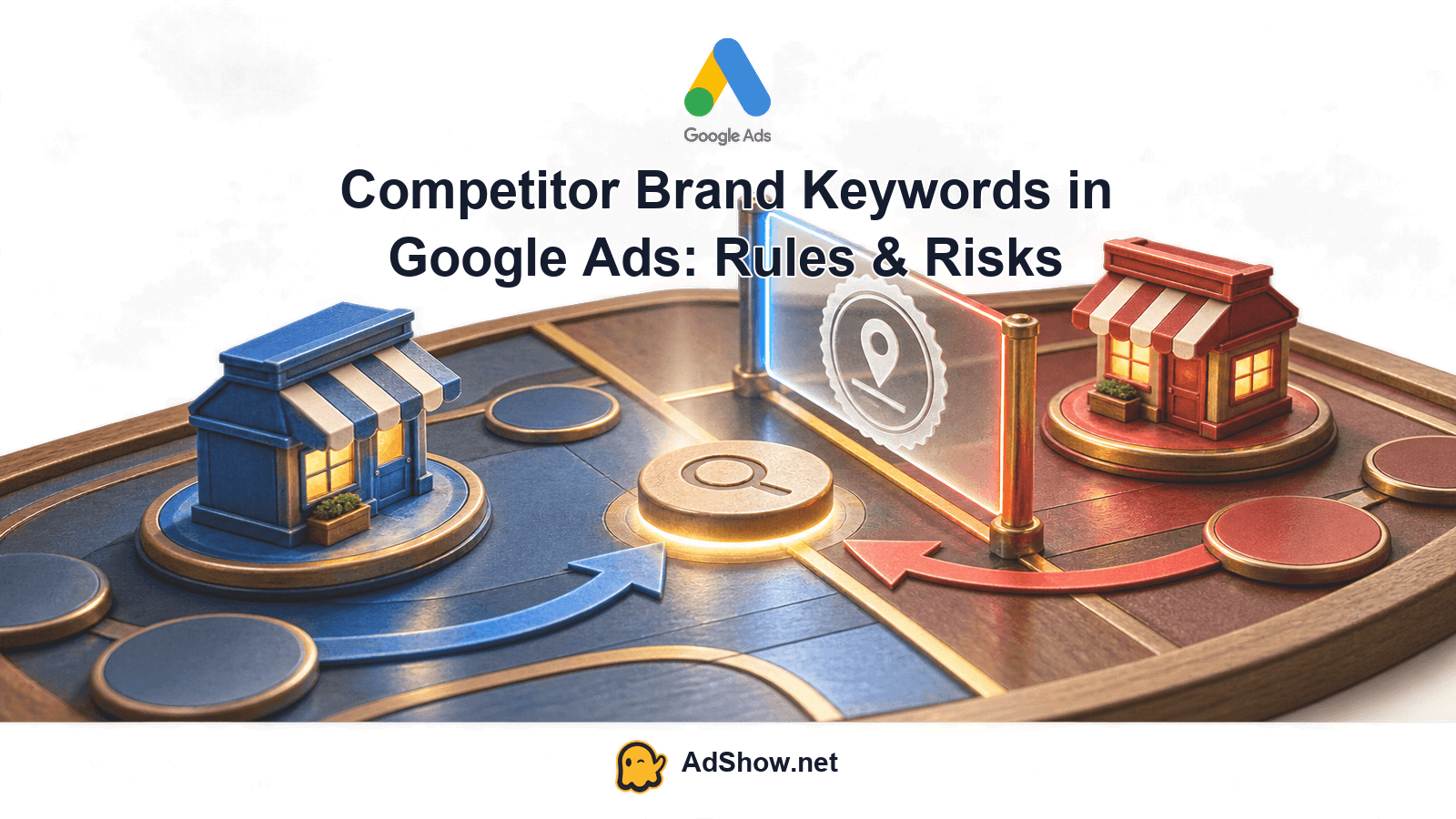
Table of contents
Yes. Google states that it does not restrict trademarks used only as keywords. That does not give an advertiser permission to use a competitor’s mark in ad text, impersonate the competitor, make unsupported comparison claims or create a confusing landing page. Treat the decision as four separate layers: bidding on the query, writing the ad, choosing the displayed business identity and building the landing page. Platform eligibility, trademark law and commercial viability are different questions. This is practical advertising guidance, not legal advice.
The short answer: bidding is not the same as using the brand
A competitor name can be eligible as a keyword even when the resulting ad is restricted or the campaign is a poor acquisition bet. Google’s current keyword-matching guidance allows broad, phrase and exact match to use signals such as the query’s meaning, intent and other context. That means the traffic you receive may extend beyond the literal competitor term, particularly with broader matching. Brand lists can also include competitors, subject to the campaign features and settings that support them.
Query layer: decide which competitor searches you want to enter and how much matching variation you can audit.
Ad layer: describe your own offer without implying affiliation, endorsement or official status.
Identity layer: make the advertiser name, domain and business representation unmistakably yours.
Landing-page layer: ensure the page, comparison claims, forms and calls reinforce the same truthful identity.
A keyword being accepted is therefore only an auction and eligibility signal. It is not a finding that the ad is lawful, non-confusing or profitable.
What Google’s trademark policy actually covers
Google’s Trademarks policy distinguishes trademarks used as keywords from trademarks used in an ad. Google says it does not restrict trademark use as a keyword. It may investigate a trademark complaint about ad text and restrict use where the ad is confusing, deceptive or misleading, including some cases involving a direct competitor. The policy also describes circumstances such as authorised resellers or informational sites where use may be treated differently.
That is platform policy, not a complete statement of trademark law. A mark can create legal exposure through likelihood of confusion, false affiliation, dilution or other theories even if Google serves the ad. The relevant rules can vary by country, state and the facts of the business relationship. Do not treat an auction win or ad approval as clearance. Ask qualified counsel about a material campaign, especially where the copy names the competitor, uses its logo or makes comparative claims.
Four checks before you publish the campaign
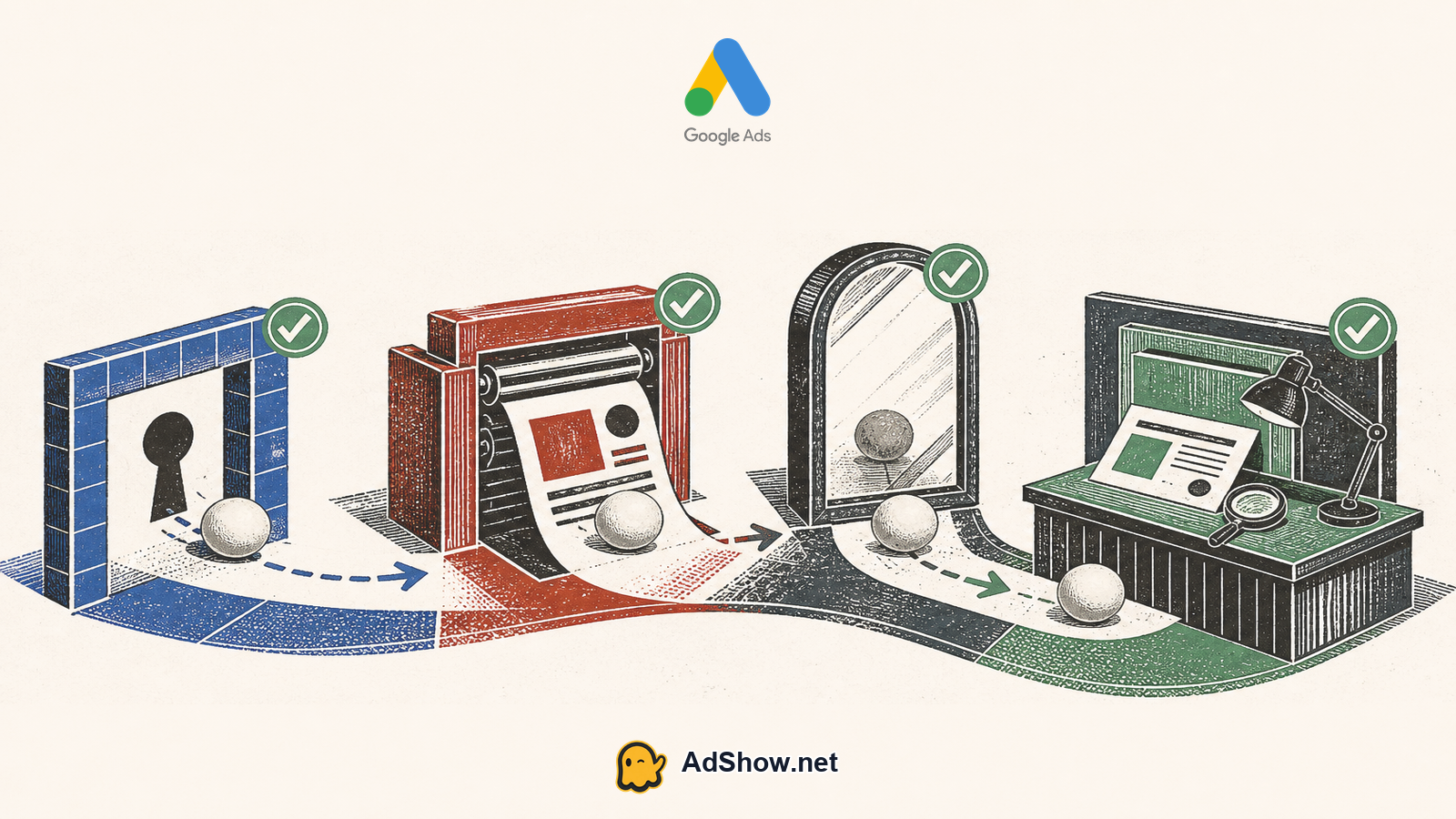
First, check the query. Use a dedicated campaign and connect the search-term report to a deliberate Google Ads keyword strategy rather than assuming an exact keyword produces only one clean intent. Negative keywords can exclude unwanted themes, but negative matching has limitations and does not replace review. Consider separate lists for support, login, careers, reviews, complaints and existing-customer intent when those searches cannot become qualified opportunities.
Second, check the ad. Do not write “official,” “authorised,” “customer service” or similar language unless it is true and supportable. Avoid inserting the competitor’s name into headlines merely to attract attention. A factual statement such as “Independent alternative for [category]” may be less risky than an implied relationship, but it still needs to be accurate in context.
Third, check identity. The business name, display URL, phone number and other assets should identify your business consistently. Google’s misleading representation policy prohibits misleading identity, affiliation, endorsement and inaccurate business representation. A campaign that looks like the competitor’s customer-service channel can create complaints, poor leads and policy action even if the keyword itself is allowed.
Fourth, check the destination. A comparison or “alternative” page should make the relationship clear and support every factual claim with current evidence. Do not copy the competitor’s design, logos, trade dress or wording in a way that suggests official status. The form, call tracking, consent language and confirmation page should continue to identify your company.
Automation can turn a permitted keyword into a bad ad
Dynamic keyword insertion is a common failure point. A keyword that contains a competitor’s brand can be inserted into a headline or description even though the manually written base copy looked safe. Automatically created assets, feed-based text and other automation can create the same problem. Preview every ad variation, including mobile renderings and combinations that the interface does not show in the first draft. Then inspect live ads after launch.
Use ad previews as a control, not as proof that every future combination is safe. Review asset reports, change history and search-term data on a defined schedule. If an automation feature cannot be constrained or audited, exclude the competitor terms from that asset path or do not use the feature. Never solve a policy concern by hiding the advertiser, rotating identities or attempting to evade review.
How to test conquest traffic without corrupting the account
Create a dedicated campaign, budget and naming convention. Keep competitor traffic out of brand and core non-brand reporting so its conversion rate, cost and lead quality remain visible.
Start with controlled exact or phrase coverage, or a carefully maintained brand list where appropriate. Expand only after reviewing the actual queries and asset combinations.
Define negatives before launch. Include irrelevant support, employment, login, complaint and research themes, while recognising that negative keywords do not remove every semantic variation automatically.
Write around your own value: price structure, availability, service area, product capability or a clearly supportable alternative. Do not impersonate the searched brand.
Use a factual comparison or alternative page only when the claims are supportable, current and easy for a visitor to understand. Show your own identity prominently.
Judge the test on qualified conversions, sales acceptance, booked appointments, revenue or offline outcomes—not clicks, form submits or short calls alone. If Google Ads gets clicks but no leads, diagnose search intent and identity confusion before changing bids. Set a stop rule before spending.
Competitor traffic often has weak relevance because the searcher asked for another company. That can mean lower Quality Score, less efficient delivery or confused calls, but there is no universal cost premium or universal penalty. Auction conditions, geography, category, ad relevance and landing-page experience determine the economics. The correct question is whether incremental qualified outcomes justify the spend after wasted contacts and operational handling.
Harris Eugene’s operator note: treat conquest as a separate acquisition hypothesis, never as a blended extension of brand or core non-brand performance. A form submit or a 60-second call can be a false positive when the person believed they had reached the competitor. Recent Reddit discussions are anecdotal, not policy evidence: one July 2026 healthcare case described recorded callers who thought they had reached the other provider, while an April 2026 discussion stressed separate reporting and careful ad copy. That is enough to require call review and lead-status feedback, not enough to claim a universal outcome.
When competitor bidding is commercially sensible—or not
A test has a defensible case when the searcher could reasonably consider alternatives, your differentiation is immediate, the sales team can identify confused enquiries and the measurement system records downstream quality. It is harder to justify when the competitor is a navigational destination, the offer is interchangeable, the sales process is expensive or your only success metric is a cheap lead.
Before launch, document the competitor list, match types, exclusions, ad variants, landing-page claims and legal review decision; the competitor Google Ads research guide explains how to collect observable evidence without copying claims. After launch, sample calls and form records, tag confusion separately, reconcile CRM outcomes and compare incremental qualified value with a control or another acquisition source where practical. If people repeatedly ask for the competitor, pause the campaign rather than optimising toward misleading conversions.
If you own the trademark and see misuse
Capture evidence before the ad changes: screenshots, date, time, query, account or advertiser name if visible, final URL, call number and the complete landing-page flow. Inspect the ad itself and the destination. A competitor bidding on your name as a keyword is not automatically a trademark-policy violation; focus on the alleged use in ad text, confusing identity, false affiliation or misleading claims.
Use Google’s official Trademark Troubleshooter and complaint route for the relevant issue. Keep the submission specific and attach the evidence requested. Consider legal counsel where the conduct may breach local trademark or unfair-competition law, involves copied brand assets or is causing material customer confusion. Do not assume a platform complaint resolves every legal remedy.
Account access does not change the rules
AdShow provides a self-service route to agency advertising accounts for Google Ads and other major platforms. Its dashboard supports visible current offers and pricing, account requests, wallet funding or top-ups and issue reports; Telegram can provide notifications and human guidance. Agency access does not waive Google’s trademark or misleading-representation policies, prevent suspension, or change auction economics, tracking, creative, offer or funnel quality. If you use an agency account, apply the same review and evidence standards.
Need a Google Ads agency-account route? Review the available AdShow option, then validate your campaign, identity, tracking and offer before funding a conquest test. Explore Google Ads agency accounts
Questions from recent advertiser discussions
Can I use a competitor’s name as an exact-match keyword?
Google says trademarks used only as keywords are not restricted by its trademark policy. Exact match still uses Google’s current matching rules, so inspect actual queries and treat the keyword decision separately from ad-copy, identity, landing-page and local-law questions.
Can I put the competitor’s trademark in my Google ad headline?
It may be restricted after a valid complaint, particularly where a direct competitor’s ad is confusing, deceptive or misleading. Avoid implying affiliation, authorisation or official customer support, and obtain legal advice for material comparative or trademark use.
Should competitor keywords share a campaign with my brand terms?
Usually no. Isolate conquest traffic with its own budget, negatives, ads, landing pages and reporting. This prevents competitor-query quality and economics from being hidden inside brand or core non-brand results.
What conversion should I use to judge a competitor campaign?
Use qualified opportunities, accepted leads, booked appointments, revenue or another verified offline outcome. A form submit or short call can be misleading when the person thought they had contacted the competitor.
Sources and scope
Official documentation defines platform behavior. Recent community discussions are used only to illustrate reported symptoms and questions; they do not prove the cause of an individual account outcome.
Google Ads: Trademarks policy — Official criteria distinguishing trademarks used as keywords from trademarks used in ads and potentially restricted uses by direct competitors.
Google Ads: misleading representation — Official policy prohibiting misleading identity, affiliation, endorsement and inaccurate business representation.
Google Ads: keyword matching — Current first-party explanation of broad, phrase and exact matching and the signals used for query matching.
Google Ads: negative keywords — Official guidance for excluding unwanted terms and the limitations of negative-match behavior.
Google Ads: brand lists — Official guidance confirming brand lists can contain an advertiser's own brands, competitors and brands in Google's library.
Google Ads Trademark Troubleshooter — Official path for trademark owners, representatives and advertisers dealing with trademark-policy issues.
Recent discussion: competitor names as keywords — April 2026 discussion advocating separate reporting and careful ad copy; community advice, not policy.
Recent discussion: confused competitor callers — July 2026 healthcare case showing that recorded competitor-query calls may be unqualified despite surface conversion signals; anecdotal.