Facebook Agency Ad Account Price: What Buyers Pay
There is no single Facebook agency ad account price. Buyers usually combine setup or subscription charges, a top-up percentage, campaign spend and operating terms.

August 24, 2026
Table of contents
There is no meaningful single Facebook agency ad account price. Buyers usually pay a mix of setup or subscription charges, a percentage on funded spend, the advertising budget itself and operating terms such as limits, ownership, support and balance handling. As a dated provider-specific example, AdShow’s public Facebook page displayed plan, setup or subscription and spend-fee information on 24 August 2026. Those figures are not a market average and may change, so verify the live offer before ordering. The useful comparison is not “which account is cheapest?” It is “what will this account cost at my spend level, and what operational control do I receive for that cost?”
What the advertised price actually represents
An agency account is usually an access and billing arrangement, not a replacement for the media budget. A quote may contain a one-time setup charge, a recurring subscription, a percentage added when you fund the account, or a combination of these. You still pay Facebook for campaign delivery through the account, and the platform’s auction determines delivery costs separately.
AdShow’s Facebook agency-account page is the relevant live reference for its own plans, fees and request workflow. On 24 August 2026, it showed provider-specific pricing fields and account-operation information. That is useful for a buyer building a forecast, but it cannot prove the average price across agencies, the future availability of a plan or the performance of any campaign. Check the page immediately before payment and save the terms you relied on.
Recent advertiser discussions show why quoted prices can look inconsistent. Buyers ask whether a partner charges a flat fee or a percentage, who owns the account, how stable access is and what support means in practice. Those discussions are useful evidence of buyer concerns, not verification of any provider’s promise. Individual reports also cannot establish that an agency account improves auction performance.
PAYG versus subscription: find the break-even point
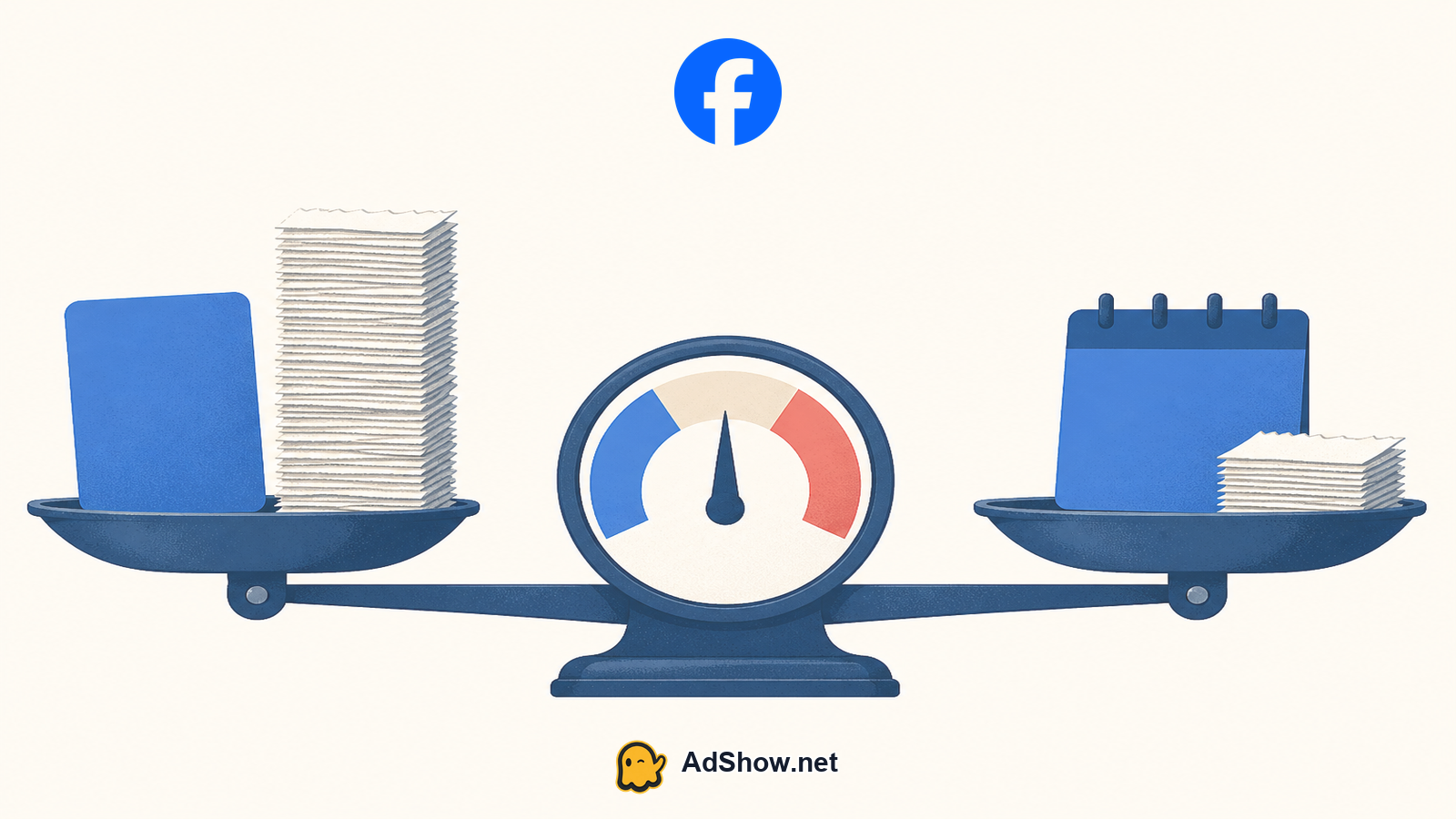
Pay-as-you-go, or PAYG, normally makes the fee rise with the amount funded or spent. It can suit a small, irregular test because you avoid paying a large fixed charge during quiet months. A subscription reverses that tradeoff: you accept a fixed recurring cost, sometimes alongside a lower usage fee, in exchange for a plan structure or operating service defined by the provider.
The simple break-even formula is: monthly subscription ÷ PAYG percentage = monthly spend at which the two usage charges are equal. For example, if a subscription were 300 and PAYG were 3%, the usage charges would meet at 10,000 of monthly funded spend. This is only a screening formula. Add setup charges, minimums, payment fees, taxes and any different treatment of unused balance before making a decision.
Harris Eugene’s operator note: Choose PAYG when spend is uncertain or testing is intermittent; consider a subscription only when expected monthly funding is stable enough to exceed the break-even point for several billing cycles. A spreadsheet using your lowest realistic month is safer than basing the decision on an optimistic launch budget.
Model the full fee stack, not the headline rate
A low percentage can still produce an expensive account if it sits on top of fixed charges or unfavorable funding rules. Build the monthly total from separate lines: setup, subscription, agency or top-up fee, campaign spend, payment processing, currency conversion, tax and any support or replacement charge stated in the terms. Do not bury the platform budget inside the account fee; it is a separate economic cost.
Write down the amount you expect to fund each month, plus a low and high case.
Apply the provider’s stated percentage to the correct base: deposit, balance load, or reported ad spend.
Add recurring and one-time charges, then spread a setup fee across the number of months you realistically expect to use the account.
Compare the total with the value of the operating terms, including limits, support route and balance rules.
Recalculate if the provider changes the plan, fee basis or payment method before launch.
Ask one precise question before ordering: “Is the percentage charged on the amount deposited, the amount spent, or another amount?” The answer changes the forecast when funds remain unused, campaigns pause or the account is funded ahead of demand.
Check whether the spend limit fits your account
A price is irrelevant if the account cannot carry your intended budget or scaling pattern. Confirm the stated daily or monthly limit, whether the limit is initial or expandable, and whether several accounts are needed to support the plan. Also ask how the provider defines a limit: campaign delivery, account billing, funding or an internal allocation can produce different practical ceilings.
Match the account to the decision in front of you. A small affiliate test may need flexible low-volume funding and quick issue reporting. An ecommerce team scaling several countries may care more about predictable capacity, separate billing and clean ownership records. Do not pay for capacity you cannot use, but do not choose solely on the lowest starting fee if a limit will force a disruptive migration.
Clarify asset ownership and access before funding
Ask who controls the agency account, business assets, payment relationship, pixels, catalogues, pages and ad data. An agency account can provide a route to advertising access without giving you ownership of every connected asset. The written answer should identify what remains yours, what is managed by the provider and what happens if the arrangement ends.
Also document the practical access model: dashboard permissions, request and approval steps, issue-reporting route, notification channel and the people authorized to act. AdShow states that its dashboard supports offer visibility, account requests, wallet funding or top-ups and issue reports, with Telegram available for notifications and human guidance. Treat those as workflow features, not as a promise of approval, uninterrupted access or campaign results.
Understand balance, top-ups and refunds
Balance handling is part of the Facebook agency ad account price because unused funds can remain exposed after a campaign stops. Before paying, read the provider’s published conditions for unused balance, setup or subscription fees, payments, top-ups and support. The AdShow account and balance FAQs are the appropriate source for its current terms; do not infer a refund right from a sales message or from the existence of a wallet.
Keep a funding record with the date, amount, currency, fee, destination account and stated balance. Confirm whether a failed top-up is reversed automatically, whether unused funds can be withdrawn, and which fees are non-refundable. If the answer is not written, treat the amount as operationally at risk until the provider confirms the rule. This is especially relevant when testing a new partner with a small budget.
What the account fee does not buy
An agency account does not repair a weak offer, broken tracking, poor creative, a slow landing page or an unprofitable funnel. It also does not override Meta’s advertising policies. The account remains subject to platform review, enforcement and delivery conditions. No responsible price comparison should imply guaranteed approval, lifetime access, no bans, lower auction costs or better return on ad spend.
A July 2026 discussion comparing agency and normal accounts reflects this distinction: operational access may change, while auction performance is a separate question. Community anecdotes can help you form questions about stability or support, but they cannot establish a platform-wide performance advantage. Test the commercial proposition with conservative funding and measurement that you control.
A buyer-side decision checklist
Verify the live provider page, currency, plan date and fee basis immediately before ordering.
Calculate total cost at low, expected and high monthly spend rather than comparing one headline percentage.
Confirm account limits, scaling conditions, ownership of connected assets and the access process.
Read unused-balance, top-up, payment and refund conditions before funding the wallet.
Ask what support covers and what it does not cover; do not treat human guidance as a performance guarantee.
Keep the first deposit proportionate to a test, especially when the provider or workflow is new to your team.
For a broader framework, see AdShow’s agency ad account total-cost model and the comparison of agency ad accounts versus personal accounts. These explain why access, billing and risk should be evaluated together rather than reduced to a single fee.
Compare the live Facebook agency options, check the current fee and balance terms, and choose the setup that fits your actual spend pattern. Compare live Facebook agency options
Questions from recent advertiser discussions
How much does a Facebook agency ad account cost?
There is no universal price. The total may combine setup or subscription charges, a percentage on funded or spent balance, campaign spend and payment or currency costs. Use the provider’s live page and calculate the total at your expected monthly spend.
Is PAYG or a subscription cheaper for Facebook advertising?
PAYG is often easier to justify for irregular or low-volume testing because the fee follows usage. A subscription may become cheaper at stable higher volume. Compare the fixed subscription with the PAYG percentage using: subscription divided by percentage equals the usage break-even spend.
Does an agency account improve Facebook ad performance?
An agency account may change the access or billing arrangement, but it does not fix tracking, creative, offer, funnel or campaign quality. It remains subject to Meta policies and auction conditions. Community experiences cannot prove a general performance advantage.
What should I confirm before funding an agency account?
Confirm the current fee basis, limits, ownership, permissions, support route, top-up process and rules for unused balance or refunds. Save the live terms and start with a proportionate test amount if the provider or workflow is unfamiliar.
Sources and scope
Official documentation defines platform behavior. Recent community discussions are used only to illustrate reported symptoms and questions; they do not prove the cause of an individual account outcome.
AdShow Facebook agency-account pricing — Current provider-specific public plans, setup fees, spend fees and workflow. These are not presented as a market average and may change.
AdShow account and balance FAQs — Current published conditions for unused balance, setup/subscription fees, payments, top-ups and support.
Recent buyer discussion: agency-account fee models — July-August 2026 discussion showing flat-fee and percentage offers and buyer concerns about stability, ownership and support; anecdotal claims are not verified promises.
Recent buyer discussion: agency versus normal delivery — July 2026 discussion distinguishing operational access from auction-performance claims; individual experiences do not establish platform-wide outcomes.