How to Advertise on TikTok: Build the First Campaign
A production-style plan for launching a first TikTok Ads campaign: brief the offer, prepare signals and creative, run preflight checks and diagnose the first 72 hours.

August 29, 2026
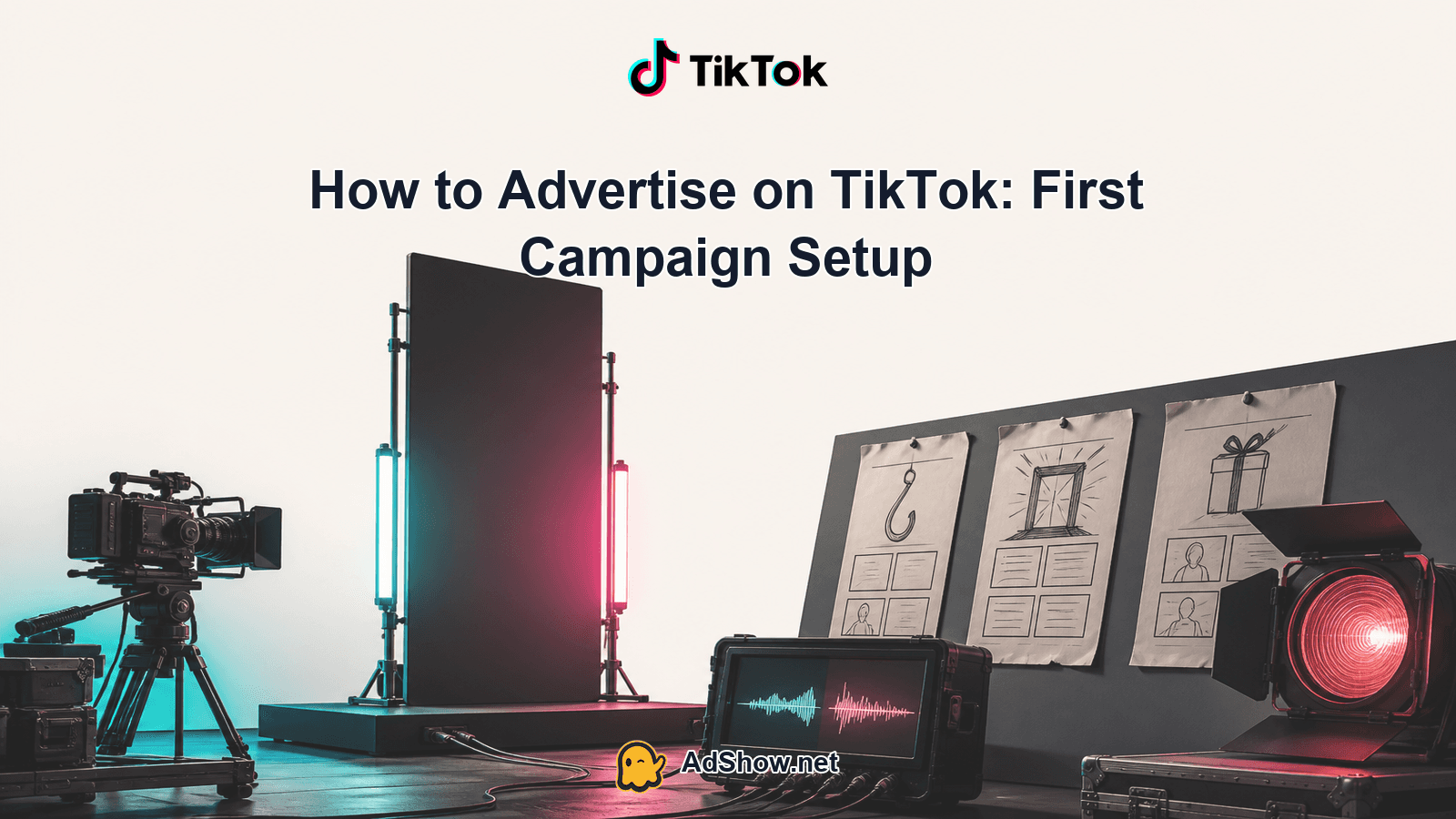
Table of contents
To learn how to advertise on TikTok, create or access TikTok Ads Manager, prepare the business and payment details, connect the relevant TikTok identity and measurement signal, choose an objective, then build the campaign, ad group and ad before submitting it for review. TikTok’s current workflow supports Manual, Search and Smart+ campaign options where available, but the right route depends on the objective, available controls, data and creative—not a universal hierarchy.
Advertisers choosing an agency-account route can request self-service TikTok agency ad account access through AdShow. Its dashboard shows current offers, supports account requests and wallet funding or top-ups, and provides issue reporting; Telegram can deliver notifications and human guidance. This access remains subject to TikTok policy and is not a guarantee of approval, uninterrupted delivery or campaign performance.
Phase 1 — Brief one commercial action
Treat the first campaign like a shoot with one intended ending. Define the commercial action—purchase, qualified lead, app install or another measurable result—and calculate the maximum acceptable acquisition cost. For a first-order model, allowable CPA can be framed as selling price minus product cost, fulfilment, payment fees, expected refunds and the contribution you need to retain. If the model relies on lifetime value, use a defensible retention window rather than optimistic future revenue.
Record one primary conversion and the target or allowable CPA beside it.
Choose the exact landing destination; do not send paid traffic to a generic homepage by default.
Bring proof that the offer works: prior sales, qualified enquiries, organic response or clear customer evidence.
Define the promise, audience problem and reason to act now without inventing scarcity or outcomes.
Harris Eugene’s operator note: **Harris Eugene operator note: Start with a measurable offer and a repeatable creative-production cadence. An account alone is not the growth system; access cannot repair weak unit economics, an unclear promise or a funnel that loses buyers after the click.**
Phase 2 — Make the signal ready before the camera rolls
For a website, install TikTok Pixel and consider Events API as a complementary server-side signal where appropriate. For an app, configure the relevant app events through the supported measurement setup. Select one event that represents the campaign’s primary outcome. A purchase campaign should not be judged mainly by page views, and a lead campaign needs a confirmed submission rather than a button click.
Use TikTok’s testing and diagnostics tools to confirm the primary event fires once, with the correct URL and useful parameters.
Validate the domain path from ad click through landing page, form or checkout on both mobile data and Wi-Fi.
Complete a real or controlled test transaction where feasible; confirm thank-you pages, payment redirects and consent tools do not suppress the event.
Compare browser, analytics, backend and TikTok records. Perfect parity is unlikely, but unexplained gaps should be investigated before buying traffic.
Phase 3 — Shoot a TikTok-native creative batch
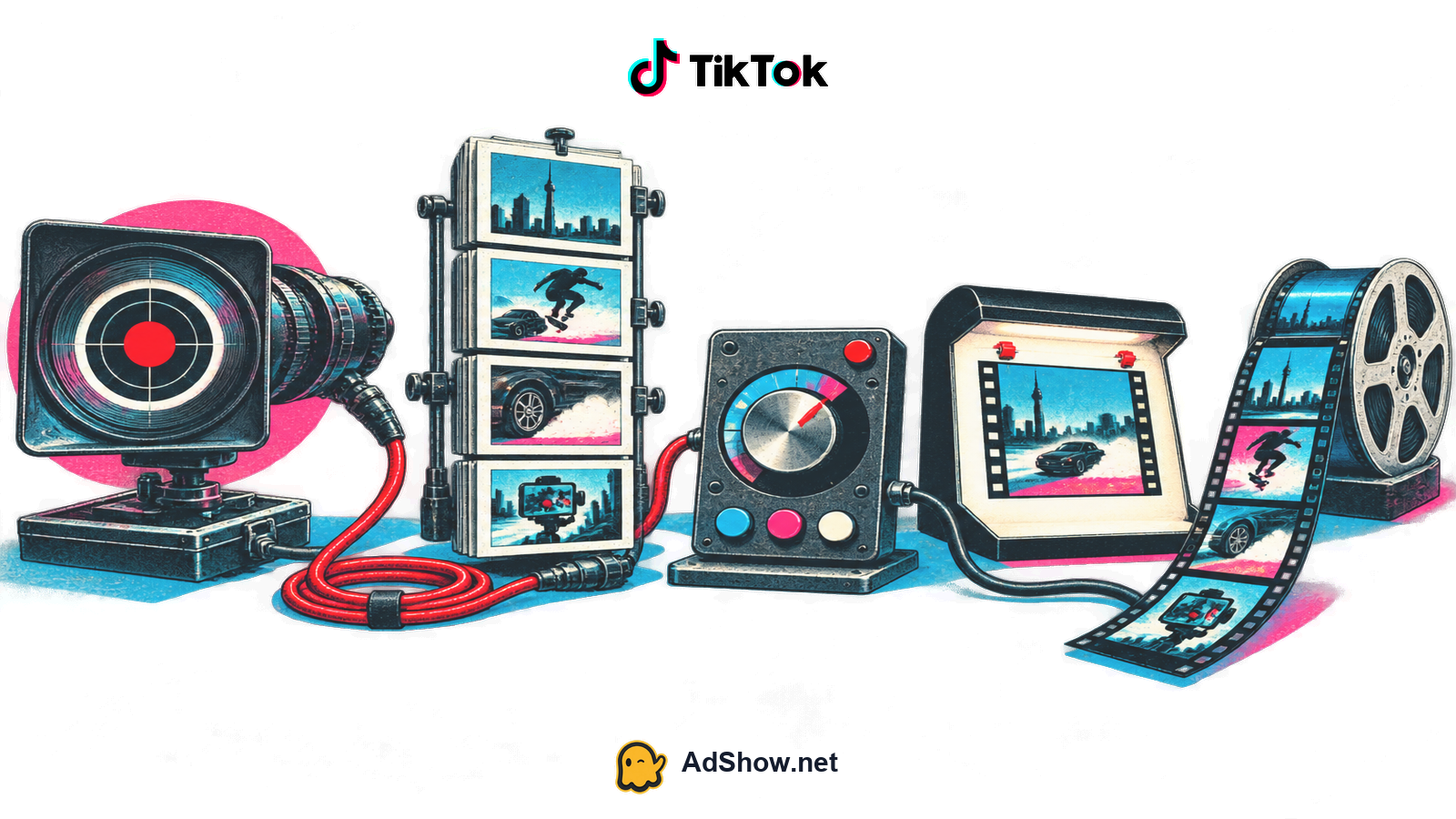
Build vertical assets for the feed rather than resizing a Meta ad and calling the job finished. Use several genuine hooks around the same offer: demonstrate the product, name the problem, show the process, answer an objection or lead with credible proof. Keep the opening legible without sound, then use voice, captions and pacing to carry attention. The landing page must continue the same promise, product, price context and next step.
Prepare multiple opening hooks, not minor caption changes on one identical video.
Show what the user will receive and avoid misleading claims, fake interfaces or unsupported results.
Check text placement against interface overlays and preview every asset on a phone.
Plan the next production batch now; creative fatigue is an operating condition, not an emergency discovered after performance falls.
Phase 4 — Build campaign, ad group and ad
TikTok’s official structure remains campaign, ad group and ad. Current documentation presents Manual, Search and Smart+ routes where available. Manual offers direct setup controls; Search is intended for eligible search-focused activity; Smart+ automates more decisions. Availability can vary by account, market and objective, and none is inherently best for every advertiser.
At campaign level, select the objective that corresponds to the primary event. Apply a campaign budget only when that allocation method suits the test; otherwise configure budget at ad-group level.
At ad-group level, set the conversion location, optimization event, placements or available inventory, audience, geography, budget, schedule and bid strategy. Keep the first structure readable enough to diagnose.
At ad level, choose or connect the authorized TikTok identity, upload the creative, write the ad text, set the call to action and enter the final destination URL.
Add the relevant tracking configuration, preview each placement and submit. TikTok reviews the ad and may also assess the destination, product category, identity and account information.
Document every launch setting in the call sheet. If delivery changes later, you need to know whether creative, targeting, budget, schedule or the destination changed.
Phase 5 — Run preflight before submission
Preflight catches expensive errors before review. Confirm that the identity is authorized, the ad and landing page describe the same offer, and the final URL opens quickly on mobile. Select the correct category and review TikTok’s applicable advertising policies instead of assuming approval on another platform transfers to TikTok.
Identity and creative: correct profile, video, caption, call to action and disclosures.
Destination: working HTTPS URL, matching product, functional checkout or form, and required business information.
Delivery: intended country, audience, optimization event, budget, bid, start time, time zone and schedule.
Commerce: funded payment method or sufficient account balance, accurate price context and no hidden conditions.
Policy: permitted product, supportable claims, suitable targeting and no attempt to evade review.
Phase 6 — Read the first 72 hours without constant edits
The first 72 hours are a diagnostic protocol, not a TikTok-defined learning threshold or a promise that every campaign should stabilize within three days. Avoid changing bids, budgets, audiences and ads every few hours. Frequent edits destroy the clean comparison needed to identify whether the blockage is review, delivery, creative response or downstream conversion.
Review: If the ad is pending, inspect its status and notifications rather than rebuilding it immediately. If review appears unusually prolonged, verify account, creative and destination issues and use the documented support route. See TikTok ads stuck under review.
Active but not spending: Check the start time and account time zone, payment or balance, audience restrictions, bid constraints, creative eligibility and whether the selected event is usable. Diagnose systematically with this active-not-spending checklist.
Spending but weak response: If impressions arrive but meaningful clicks or engagement do not, treat the hook, clarity and creative-market match as the first suspects. Do not hide a weak asset by repeatedly widening targeting.
Clicks but weak downstream conversion: Test the page on a phone, confirm event firing, compare the ad promise with the landing page, and inspect load time, price objections, form friction and checkout failures.
Conversions but unacceptable economics: Compare actual CPA with allowable CPA and contribution, then decide whether the constraint is creative cost, conversion rate, offer economics or customer quality. Do not celebrate surface metrics that fail the commercial brief.
Recent advertiser discussions on Reddit are anecdotal, not platform rules or benchmarks. They nevertheless reflect recurring concerns: campaigns judged before meaningful delivery, creative batches starved or rotated without a plan, and recycled Meta assets that do not fit TikTok viewing behaviour. Use that vocabulary to frame checks, while relying on official documentation for platform behaviour.
Wrap the shoot, then schedule the next batch
At the end of the first read, preserve a version of the settings and classify the result: review problem, delivery constraint, weak creative response, landing-page failure or uneconomic conversion. Change the narrowest plausible variable and record the consequence. A disciplined advertiser leaves the first campaign with more than an ad account: a verified event, a clear cost ceiling, a creative backlog and a repeatable review cadence. For additional setup context, see launching a new TikTok ad account and first campaign and protecting access through TikTok Business Center.
Review current TikTok agency-account access options, submit a request, fund the wallet and report account issues from the AdShow dashboard. Platform approval and advertising performance are not guaranteed. View TikTok agency ad account access
Questions from recent advertiser discussions
Should a first TikTok campaign use Manual or Smart+?
Choose according to the objective, available data and level of control required. Manual makes individual setup decisions more visible; Smart+ automates more of them. Search is relevant where that campaign option is available and search intent fits the offer. TikTok does not designate one route as universally best.
Do I need TikTok Pixel or Events API before launching?
A website conversion campaign needs a reliable measurement signal. Pixel is a common starting point, while Events API can complement browser measurement. App advertisers need supported app-event tracking. Test the primary event and checkout or lead path before paying for traffic.
Why is my TikTok ad active but not spending?
Active status does not guarantee immediate delivery. Check schedule and time zone, payment or balance, bid constraints, audience size, creative eligibility, optimization-event readiness and notifications. Avoid duplicating campaigns until those causes have been isolated.
How many creatives should I launch in the first campaign?
There is no official number that suits every budget and format. Prepare several materially different hooks around one offer, while keeping the structure small enough that each asset has a realistic chance to deliver. Maintain a production cadence instead of waiting for fatigue before making replacements.
Sources and scope
Official documentation defines platform behavior. Recent community discussions are used only to illustrate reported symptoms and questions; they do not prove the cause of an individual account outcome.
TikTok: current campaign setup — Official October 2025 workflow for campaign, ad group and ad structure plus Manual, Search and Smart+ campaign options.
TikTok: create an ad — Official ad-level setup after campaign and ad-group creation, including identity, creative, destination and tracking.
TikTok: first ad for new advertisers — Current guided creation path and submission for review and approval.
TikTok: current Ads Manager step-by-step guide — TikTok's 2026 first-party overview of account and first-campaign setup.
Recent discussion: campaign not starting — August 2026 discussion illustrating confusion between budget, creative availability and early delivery; anecdotal.
Recent discussion: first TikTok campaign — February 2026 campaign discussion emphasizing downstream economics over isolated surface metrics; community experience, not a benchmark.
Recent discussion: creative cadence — April 2026 discussion showing current advertiser concern about creative rotation and budget allocation; anecdotal.