Taboola Gets Clicks but No Conversions? Audit the Signal
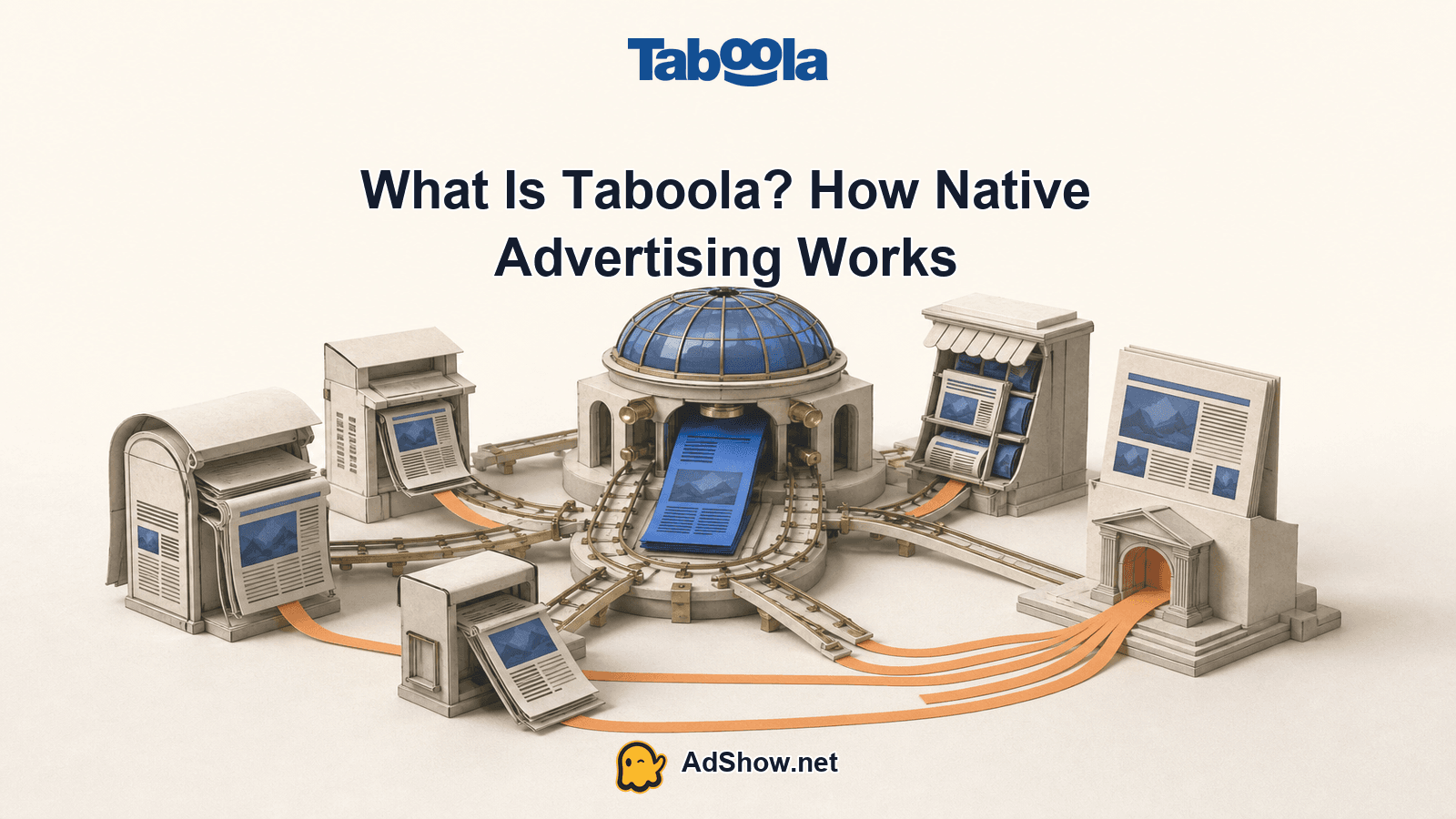
Taboola clicks with no conversions do not automatically mean bad traffic. Separate missing tracking from missing demand, then audit sample size, sources and funnel fit.

August 23, 2026
Table of contents
If Taboola gets clicks but no conversions, first separate zero tracked conversions from zero real conversions. A missing Taboola event can be a measurement failure; a verified absence of purchases or leads is a demand, traffic-quality or funnel problem. Do not replace the account or scale the campaign until you know which one you have. Check the purchase or lead event directly, confirm the click ID and cross-domain flow, then judge whether enough qualified traffic has accumulated. If tracking is sound, compare publishers, placements and landing-page behavior against your target CPA and margin. The objective is not to make the dashboard look healthier; it is to identify where the signal disappears.
1. Measurement integrity: is the conversion actually being recorded?
If the campaign is active but cannot generate impressions or clicks, stop here and use the Taboola active but not spending guide; that is a delivery diagnosis, not a post-click conversion audit.
Start with the uncomfortable possibility that Taboola has generated a conversion that your reporting cannot see. A pixel may load while the purchase, registration or lead event never fires. It may also fire on the wrong page, use an inconsistent event name, omit value data or lose attribution when the visitor moves between domains. Taboola’s official documentation covers both pixel and server-to-server tracking, while its testing guidance specifically addresses event matching, click IDs, cookies and cross-domain integrity. Use those checks before diagnosing traffic quality.
Open the conversion definition and confirm that the event represents the business outcome you actually value, not merely a page view or button click.
Complete a controlled test from ad click to confirmation page. Verify that the expected event fires once, carries the intended value and is associated with the correct click information.
Compare Taboola’s recorded events with the destination platform, CRM, checkout system or analytics tool. Reconcile time zones, attribution windows, duplicate handling and delayed server events.
Inspect the purchase or lead event on the real production path, including mobile, redirects, consent flows and any cross-domain checkout.
A community post about Shopify and Taboola recently emphasized checking whether the purchase event is present. That is useful vocabulary for an audit, not proof that missing purchase events explain every campaign with no conversions. The available evidence cannot establish the cause of your account without a controlled test and an independent business-side count. If your CRM shows qualified leads or your payment processor shows orders while Taboola shows zero, treat the reporting layer as the first suspect.
2. Sample sufficiency: have you earned a decision yet?
A campaign can have clicks and still provide too little evidence to distinguish a weak offer from ordinary variance. There is no universal click count at which every Taboola campaign should convert. Conversion probability depends on price, intent, audience, device mix, landing page, geography, checkout friction and the event definition. A few inexpensive clicks can be encouraging, disappointing or statistically uninformative depending on the economics.
Set a decision boundary before buying more traffic. Start with your target CPA, gross margin after fulfillment and any non-negotiable contribution margin. Then decide how much loss you are willing to tolerate while collecting evidence. For example, you might permit a test to spend a defined fraction or multiple of target CPA before a major change, but that boundary belongs to your business rather than to a universal Taboola rule. Record the boundary at campaign or publisher level so emotion does not determine the next action.
If tracking is unverified, spend is producing diagnostic uncertainty rather than reliable performance evidence.
If tracking is verified but the sample is small, avoid declaring the source dead solely because conversions are currently zero.
If spend has crossed your pre-set loss boundary with no meaningful downstream signal, pause or reduce exposure and investigate instead of automatically increasing budget.
Judge more than clicks: landing-page views, engaged sessions, form starts, checkout starts, qualified leads and revenue can show where the funnel is failing.
3. Publisher and source quality: where is the loss concentrated?
Taboola traffic is not a single homogeneous audience. The campaign can contain different publishers, placements, devices, geographies and creative contexts. An account-level average may hide a small group producing most of the clicks and none of the useful behavior. Break the data down as far as the available reporting allows, while keeping the sample size visible. Look for sources with high click volume but unusually weak landing-page engagement, short sessions, no form starts or no checkout progression.
Use a practical publisher-level loss rule: define the maximum amount you are willing to lose on a publisher before pausing, bidding down or requiring stronger evidence. Base that boundary on target CPA, margin and the role of the source in your test. Do not copy a fixed number from another advertiser. A high-margin lead funnel, a low-margin ecommerce product and a subscription trial cannot share the same loss rule. The rule should also account for whether the source is generating valuable pre-conversion signals.
A June 2026 community discussion contrasted CPC with post-click signals and argued that clicks without downstream feedback give an optimizer weak information. That is an operational opinion, not a controlled finding about all Taboola inventory. It does, however, support a sensible diagnostic question: are you optimizing toward a business event, or merely purchasing activity that ends at the click?
Harris Eugene’s operator note: **Harris Eugene operator note: I would not make a publisher decision from conversion count alone when the event has not been independently verified. Once tracking is confirmed, I prefer a pre-written source loss boundary tied to target CPA and margin, with post-click signals used as supporting evidence rather than as a substitute for revenue.**
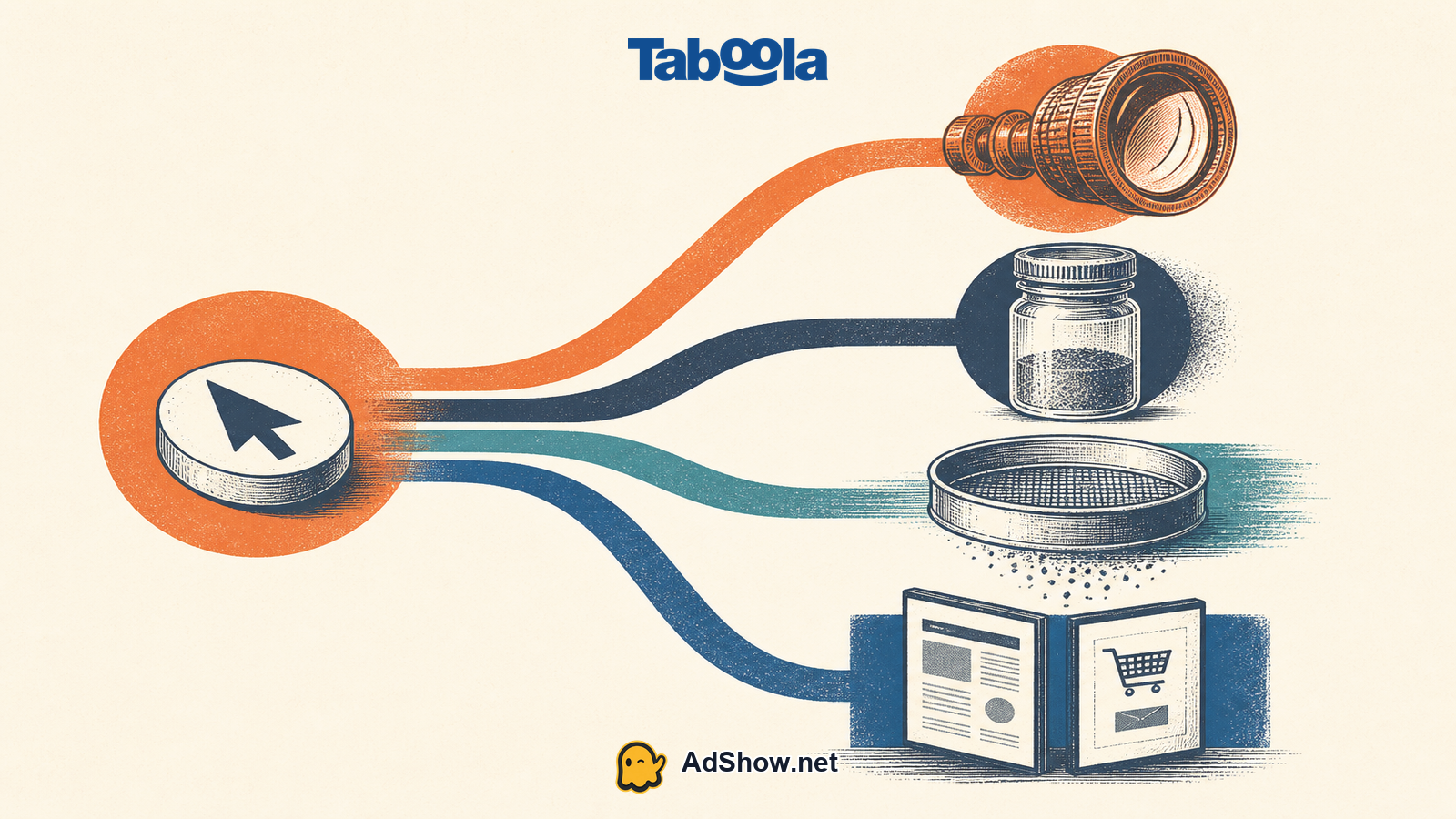
4. Post-click mismatch: did the visitor receive what the ad implied?
When measurement is sound and the source has enough evidence, inspect the handoff from ad to offer. A click can be genuine yet commercially irrelevant if the headline promises a discount, outcome or product that the landing page does not immediately deliver. Other mismatches include a broad editorial angle pointing to a narrow offer, a lead form asking for too much information, a slow mobile page, an unavailable country, an unsuitable payment method or a checkout that breaks after the first step.
Audit the complete path as a new visitor. Read the ad and landing page side by side. Confirm that the same audience, promise, price and next step remain clear. Segment conversion behavior by device, geography, publisher and creative where possible. If visitors reach the page but do not engage, suspect relevance, load speed or message fit. If they start the form or checkout but fail later, inspect friction, trust, pricing, payment and technical errors. A different Taboola account cannot repair any of those weaknesses.
A compact decision checklist
Can an independent system confirm whether real leads, orders or subscriptions exist?
Does the Taboola event fire on the intended production path, with correct click matching and no duplicate or missing events?
Has the campaign crossed the business’s own evidence and loss boundaries?
Which publishers, devices, locations and creatives consume spend without producing meaningful post-click behavior?
Does the landing page deliver the same promise as the ad, quickly and with a workable conversion path?
What single change will produce the clearest next diagnostic signal?
When an account change is—and is not—the answer
If the problem is broken tracking, weak publisher selection, insufficient sample or post-click mismatch, changing accounts does not fix the underlying system. It can make diagnosis harder by introducing another variable. Resolve measurement and funnel questions first, and keep the campaign subject to Taboola’s advertising policies and review processes. Never use replacement accounts, proxies, anti-detect browsers or identity changes to evade enforcement.
An agency account can still be an operational option when you have already diagnosed the campaign and need a suitable account arrangement for legitimate buying. AdShow provides self-service agency advertising accounts for Taboola and other major platforms, with dashboard functions for offer visibility, account requests, top-ups and issue reports. Review the Taboola agency account option only after the funnel and measurement audit. It is not a remedy for missing events, poor traffic quality, policy problems or an offer that does not convert.
Audit the signal first. If your tracking, economics and funnel are understood and you still need an operational Taboola account option, review AdShow’s Taboola agency account service. Taboola agency account option
Questions from recent advertiser discussions
Why does Taboola show clicks but no conversions?
The cause may be missing or misconfigured tracking, too little sample, weak publisher-level traffic or a post-click mismatch. Verify the business outcome independently before choosing one explanation.
Can a Taboola pixel be installed but still miss purchases?
Yes. Installation does not prove that the purchase event fires correctly. Test the full path, including event matching, click ID handling, cookies, redirects and cross-domain checkout.
How many Taboola clicks should I wait for before pausing?
There is no universal threshold. Set a boundary from target CPA, margin and acceptable test loss, then include downstream signals and sample quality in the decision.
Will a new Taboola account fix clicks with no conversions?
Not if the issue is tracking, source quality, offer relevance or funnel friction. An account change is an operational choice, not a repair for weak measurement or a weak post-click experience.
Sources and scope
Official documentation defines platform behavior. Recent community discussions are used only to illustrate reported symptoms and questions; they do not prove the cause of an individual account outcome.
Taboola conversion tracking developer center — Current official overview of pixel and server-to-server conversion tracking.
Taboola conversion testing tool — Official end-to-end testing guidance covering event matching, click ID, cookies and cross-domain integrity.
Taboola: defining conversions — Current official guidance for configuring customized conversion events and values.
Recent native-ad discussion: pixel installed but purchase missing — March 2026 community post highlighting the need to verify the purchase event; it is not an official audit of Taboola.
Recent discussion: Taboola CPC versus post-click signals — June 2026 discussion arguing that clicks without post-click signals give the optimizer weak feedback; anecdotal operational opinion.